

Summary: If you're helping an older person stand up from a chair, the aim isn't to lift them but instead to help them use as much of their own strength as they safely can, with the right support. This guide explains the approach Jo Cleary demonstrates in our video, the mistakes to avoid, and when to stop and ask for professional mobility advice.
Contents
If you've started helping a parent or partner get out of a chair, it can be surprisingly difficult to know how much help to give. The instinct is often to grab an arm, pull upwards or take more of their weight. That can feel helpful in the moment, but it can make the movement harder for them and put both of you under unnecessary strain.
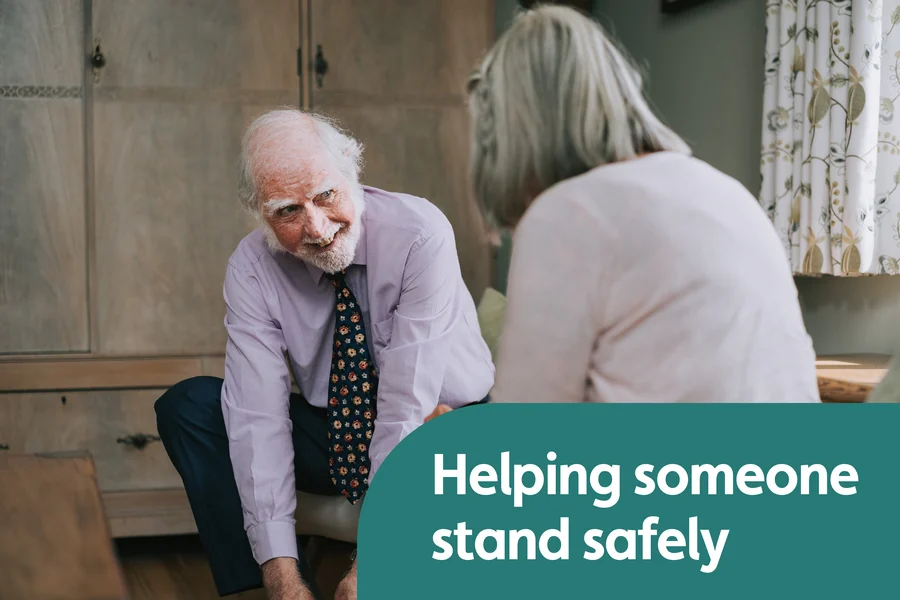
The safer starting point is to work with the person's own movement rather than trying to lift them. In the video below, Jo Cleary, our Learning and Development Manager, demonstrates the approach she teaches at Unique Senior Care. With more than 25 years' experience in care and training, Jo explains how to support someone to stand safely and some of the common mistakes to avoid.
What to check before helping someone stand
Making sure that you're helping someone stand safely actually starts before anyone moves. The Health and Safety Executive recommends that moving-and-handling support takes account of the person's individual abilities, including how much of their own weight they can take, whether they can participate in the movement, and whether equipment or additional help is needed.
So before you begin, check how the person is feeling that day. Pain, tiredness, weakness, dizziness or a recent change in mobility can all mean the usual approach isn't appropriate.
If falls are becoming more frequent, our guide to preventing falls in older people looks at some of the wider factors worth checking at home.
How to help someone stand up from a chair safely
If the person has previously been assessed as able to stand with this level of support, start by giving them time to do as much as they can themselves. That matters for dignity and independence, but it also means you're not unnecessarily taking their full weight.
Jo's demonstration follows a simple sequence:
A useful phrase from Jo's training is “paws, not claws”. In other words, support with a broad hand rather than gripping with your fingers. The video shows what this looks like in practice.
Mistakes to avoid when helping someone stand from a chair
The biggest mistake is trying to turn the movement into a lift. Pulling someone by their arms or from under their armpits can put strain on their shoulders and skin, while also leaving you taking far more of their weight than you should.
Other common problems include rushing, starting while the person is sitting too far back, forgetting your own posture, or moving before you've agreed a clear cue.
It is also worth remembering that a technique that was appropriate six months ago may not be right now. Mobility can change after illness, a fall, surgery or a change in someone's health. If you're finding you have to work harder to get them up, treat that as a reason to review the support rather than simply pulling more.
How to use a walking frame when standing up from a chair
If the person uses a walking frame, one common mistake is asking them to pull themselves up on it. NHS physiotherapy guidance is clear that a walking frame should not be used to pull up from the chair because it can move or tip.
Instead, the person should use the chair arms to push up if they can, become steady in standing, and then place their hands onto the frame. Jo demonstrates the same sequence in the video.
What to do if someone feels dizzy or unsteady after standing
Once the person is upright, give them a moment before they start walking. Some people feel light-headed or weak when they first stand. A drop in blood pressure on standing, known as postural hypotension, is one possible reason for repeated dizziness, although there are other causes too.
If they feel dizzy, don't encourage them to keep walking. Help them return to a safe sitting position if you can do so safely and let the feeling settle. If dizziness or fainting keeps happening, the NHS advises getting it checked by a GP or other healthcare professional.
When to get professional mobility advice before helping someone stand
There isn't one standing technique that is right for everybody. Someone's strength, balance, pain, cognition, joint movement and ability to follow instructions can all affect the safest way to move. That's why professional moving-and-handling guidance is based on the individual person, rather than a standard technique used in every situation.
A Physiotherapist or Occupational Therapist can assess how the person moves and whether changes to the chair, a walking aid, a standing aid or another piece of equipment would help. If someone is recovering after illness, surgery or a hospital stay, our information on physical therapy support at home explains how home care can work alongside professional rehabilitation plans.
If you're already supporting a family member and want to understand safer moving and handling in more depth, you can also read about our moving and handling training for family carers.
The most useful thing to remember is that helping someone stand should not feel like lifting them. If it regularly does, or if either of you feels unsafe, that is the point to stop and get the person's mobility and support needs reviewed.
If a parent or partner is needing more help with everyday movement, personal care or staying safe at home, a conversation with a Care Manager can help you understand what support might be appropriate alongside any clinical advice they already have.
External references
- Health and Safety Executive: managing moving and handling risks
- Parkinson's UK: how to safely provide assistance
- South Tees Hospitals NHS Foundation Trust: using a walking frame
- NHS: low blood pressure and postural hypotension
Unique Senior Care is a regulated provider of live-in and visiting care. This article provides general information and does not replace an individual mobility or moving-and-handling assessment.
Discover More Support & Information For Your Care Journey
Visit our Care Advice Hub for expert articles, helpful videos, in-depth guides, and answers to common questions - helping you make informed care decisions with confidence.
Explore Now
Jo joined Unique Senior Care as a Carer in 2011, transitioning from a nursing background. With 25 years of experience in health and social care, including mental health and children with disabilities, Jo has embraced numerous growth opportunities within the company.
Passionate about learning and development, Jo earned a Level 5 Diploma in this field and is committed to equipping teams with the skills needed for outstanding care.
Jo’s qualifications include advanced training in people handling, risk assessment, safeguarding, basic life support, first aid, health and safety, and dementia care. Jo has also completed numerous workshops and CPD courses, such as the SCIE’s Co-Production webinar.
These accomplishments reflect Jo’s dedication to fostering a culture of safety and excellence in care.