

Summary: In England, a carer's assessment is a free assessment of how providing unpaid care for another adult affects your life and what support you may need. Under the Care Act 2014, councils must assess adult carers who appear to have support needs, regardless of their income or the number of hours they care. This guide explains who counts as an unpaid carer, how to request an assessment, the questions you may be asked and what happens afterwards, including possible respite care, replacement care and direct payments. It also explains when agreed funding may be used to arrange support from a private home care provider.
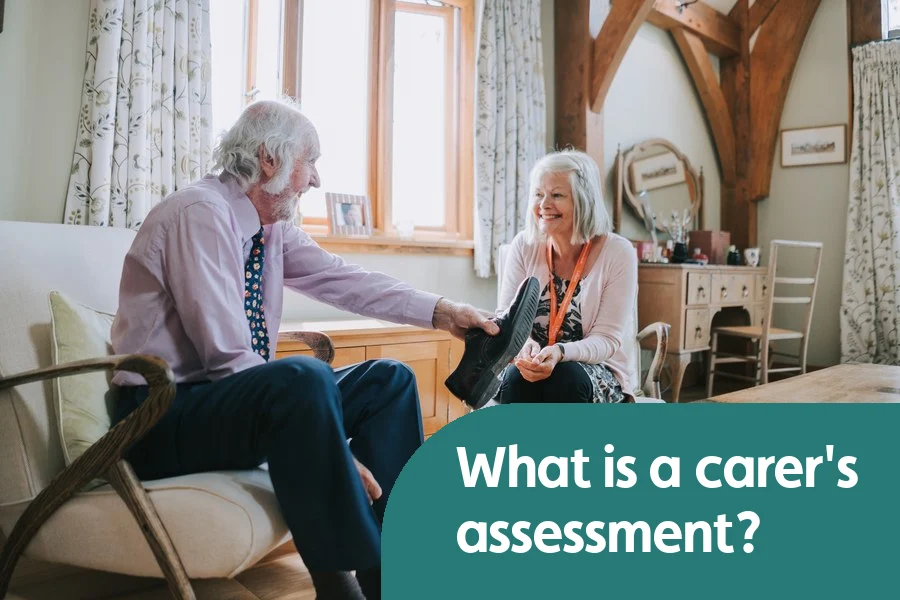
Looking after a parent, partner or friend can become part of everyday life so gradually that you barely think of yourself as a carer. You might be doing the shopping, helping with medication, organising appointments or making sure they're safe at home. And you might be wondering how much longer you can manage everything alongside your own life.
You don't have to wait until you're exhausted to ask for help. A carer's assessment is an opportunity to talk about what caring means for you, what you're finding difficult and what might make things more manageable.
What is a carer's assessment, and who can have one?
What counts as being an unpaid carer?
An unpaid carer is someone who looks after a family member, partner, friend or neighbour who needs help because of illness, disability, a mental health condition, addiction or difficulties associated with older age. It doesn't mean someone employed to provide professional care.
You might help your dad get washed and dressed, collect prescriptions for your partner, take a friend to appointments, organise meals or regularly check that someone is safe at home. You might also provide emotional support or manage bills and appointments. You don't have to live with the person or provide care every day to be a carer.
Many people do these things without describing themselves as carers. But what's important to be aware of is the level of support you're providing and whether you may need help yourself.
Our recent analysis of unpaid caring across England shows how gradually these responsibilities can build. One family member might start by collecting shopping or checking in by phone, then find themselves managing appointments, personal care and overnight worries. You don't have to call yourself a carer to deserve support with that responsibility.
What is a carer's assessment?
A carer's assessment is a free conversation about how caring affects your health, wellbeing, relationships, work and everyday life. It isn't an inspection of your caring abilities. It helps the council understand your needs, whether you're willing and able to continue caring, and what support could make a difference.
Who is entitled to a carer's assessment in England?
Under section 10 of the Care Act 2014, councils must assess an adult who provides or intends to provide unpaid care for another adult where it appears they may have support needs, now or in the future. You don't have to prove you qualify for funded services before being assessed.
- There's no minimum number of caring hours.
- You don't need to live with the person you support.
- You don't have to claim Carer's Allowance.
- Your income and savings don't determine your right to an assessment.
- The person you care for doesn't have to receive council-funded services.
The legal definition has exceptions, including care provided under a contract or as voluntary work, although councils can consider individual circumstances. If you're unsure whether your role counts, ask adult social care rather than ruling yourself out.
This guide concerns adult carers in England. The rules differ in Scotland, Wales and Northern Ireland. If you're caring for a child, ask your council about the appropriate parent-carer or children's services assessment.
How do you request a carer's assessment from the council?
Contact the adult social care team at the council responsible for the area where the person you care for lives, which may be a different council from your own. You can find the relevant authority through GOV.UK's council finder.
- Find the council's adult social care contact details.
- Say that you provide unpaid care and would like a carer's assessment under the Care Act 2014.
- Explain briefly what you do and what you're struggling with, especially if support is urgent.
- Ask when the assessment might take place, whether it can be done by telephone or in person, and whether you need to prepare anything.
You could say: “I help care for my dad, and it's beginning to affect my work and sleep. I'd like a carer's assessment to understand what support is available.”
1. Find
2. Ask
3. Prepare
The council or an organisation working on its behalf may carry out the assessment. It might happen in person, over the phone or online, depending on your circumstances. There isn't one fixed national waiting time; councils should consider how urgent your situation is and tell you what to expect.
You can ask for an assessment in your own right even if your relative doesn't want their own care needs assessment. If they cannot safely be left alone while you attend, you can tell the council this when arranging it.
What questions are asked during a carer's assessment?
The conversation is about your day-to-day experience, not whether you're doing a good job. It should consider your wellbeing, the care you provide, whether you're willing and able to continue, and the things you'd like to be able to do in your own life.
There isn't a standard national questionnaire, but these are examples of the kinds of questions you might be asked:
- What help do you provide, and how often, including during the night?
- Can the person you care for be left safely on their own?
- How is caring affecting your sleep, physical health or emotional wellbeing?
- Have you had to reduce your working hours or change your plans?
- Do you have time for friends, hobbies, exercise or other family responsibilities?
- What happens if you're ill or unable to provide care?
- Would regular breaks or help with particular tasks make a difference?
- Are you willing and able to continue caring in the same way?
How to prepare for your carer's assessment
Think about a typical week, but also the difficult days. You might find it helpful to write down the jobs you do, how long they take, what happens overnight and the things you've had to give up or put off.
Don't minimise how tiring things are because you're used to managing. If you're regularly missing sleep or worried about leaving someone alone, say so. Equally, you can explain which parts of caring you want to continue and where you would welcome help.
There's a reason to take caring responsibilities, and their impact on you as a carer, seriously. In our England caring divide report, we highlighted the latest Survey of Adult Carers in England: the share of carers known to councils who said they could look after themselves properly fell from 54.9% in 2016/17 to 46.0% in 2025/26. Those figures describe survey respondents known to local authorities, not every unpaid carer in England. They show why looking after your own wellbeing is just as important as caring for the person you support.
Share of surveyed carers known to local authorities who said they could look after themselves properly. These are separate survey years, not the same people tracked over time. Source: USC analysis of the Survey of Adult Carers in England.
The NHS suggests having details such as your GP's contact information and the person you care for's details available, where possible. You can also ask to have someone with you. If you have substantial difficulty taking part and there is no appropriate person to support you, the council may need to arrange an independent advocate.
What support can you get after a carer's assessment?
The assessment helps the council decide whether you have eligible support needs and what could help. The national eligibility rules consider whether caring affects your health or ability to achieve everyday outcomes, and whether this has a significant impact on your wellbeing.
Depending on your circumstances, possible support includes:
- Breaks from caring: someone else taking over for an agreed period, sometimes called replacement care or respite care.
- Practical help: support with particular tasks or equipment and training that may make caring easier.
- Advice and connections: local carers' groups, benefits information and other community services.
- A personal budget or direct payment: where eligible needs are to be met through funded support and the relevant conditions are satisfied.
- Planning for emergencies: discussing what happens if you suddenly can't provide care.
Something to bear in mind is that being entitled to an assessment is different from being eligible for funded support. Not every assessment results in council-funded services and the outcome depends on the needs identified, eligibility decisions and the agreed way of meeting those needs. If support is delivered directly to the person you care for, their own assessment, agreement and charging arrangements may also be relevant.
Is a carer's assessment free?
Yes. The assessment itself is free. Support that follows isn't necessarily free: councils have charging powers in some circumstances, and a financial assessment may be needed. If a service is provided to the person receiving care, any applicable charge is assessed against that person's circumstances, not charged to you as their carer.
Can direct payments from a carer's assessment pay for private home care?
Sometimes, yes. A direct payment is money provided in place of council-arranged support, allowing the eligible person to organise agreed services themselves. It must be used to meet the needs set out in the relevant support plan. GOV.UK explains how to apply for direct payments.
For example, if replacement care is agreed as a way to meet a carer's eligible needs, the council can discuss whether a direct payment is appropriate and whether it could be used to arrange support from a private care provider. Alternatively, the person receiving care might have their own care needs assessment and direct payment to arrange home care.
These are different funding routes. A carer's assessment doesn't automatically give you a budget to spend on any private care service, and you should confirm the proposed arrangement with the council before committing to costs.
Where private care is appropriate, options might include visiting care at home, daytime sitting support in areas where it's available, or respite live-in care for a longer break. Ask the council whether the proposed care, provider and price fit the agreed plan, and whether any additional cost would need to be paid privately.
What happens after a carer's assessment if you need more help?
The council should explain its decision and, where it agrees to meet eligible needs, work with you on a support plan. Ask for the outcome in writing and make sure you understand what support is being offered, who will arrange it and whether there will be a charge.
If you're told you don't qualify for funded support, you should still receive information and advice about other help available. You can ask for clarification about the decision and how to request a reassessment if things change.
Ask the council to explain how it considered your wellbeing, the outcomes you cannot achieve and the effect caring has on your life. If you disagree with the assessment or outcome, start by raising the issue with the council. You can use its complaints procedure and, where appropriate, take an unresolved complaint to the Local Government and Social Care Ombudsman.
Remember that your caring role may change. If your relative's needs increase, you're becoming exhausted or your work and family commitments change, contact the council again. You don't need to keep managing with a support plan that no longer reflects your circumstances.
Getting help at home alongside a carer's assessment
A carer's assessment can be a useful starting point for recognising the support you need. If you're also considering privately funded care, you can explore the options separately and decide what is manageable for your family.
A carer's assessment can help you understand what support the council may offer. If you're also thinking about visiting care or a break from caring, our team can explain the home care options available and how they could fit around your family.
External references
- NHS: Carer's assessments
- Care Act 2014, section 10
- GOV.UK: Care and support statutory guidance
- GOV.UK: Apply for direct payments
- Unique Senior Care: England’s caring divide, with Census and Survey of Adult Carers sources and methodology
Information checked October 2026. This article describes arrangements for adult unpaid carers in England; individual council decisions and funding arrangements vary. Unique Senior Care is a regulated provider of live-in and visiting care.

With over 40 years of experience in the care industry, providing outstanding care has always been Helena’s core mission.
Helena has been a dedicated member of Unique Senior Care for eight years, starting as Care Manager and advancing to Head of Extra Care and now serving as Director of Operations.
She holds a Level 5 Diploma in Leadership for Health and Social Care and Children and Young People’s Services (England), as well as a Diploma in Welfare Services. Helena has completed various leadership and management courses, enhancing her expertise in the care industry.
Helena has authored published articles, including one for Skills for Care on managing change through the COVID pandemic. She has a steadfast commitment to advocating for and supporting those in need, ensuring their voices are heard and their rights upheld.