
Your complete guide to live-in care in the UK
- Everything you need to know, from costs and funding to choosing the right provider
- Written by our expert care team and updated July 2026
- Download the full guide free, including our printable care checklist
Speak to a care expert
Find care in your area
Enter the postcode where care is required

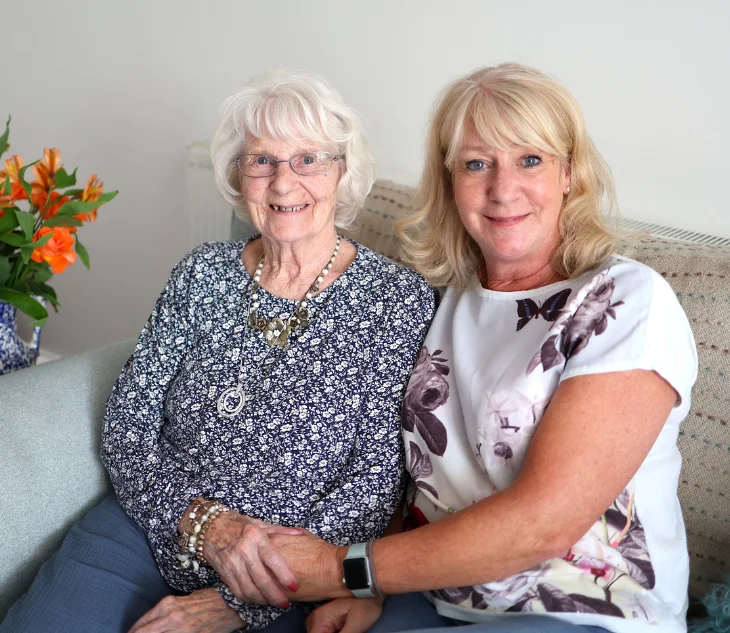

My mum’s got all her things around her, she’s got more freedom and 1-1 with the carers. She sleeps better, eats better, is more content and can go out when she likes.




This guide covers everything you need to know about live-in care in the UK: how it works, what it costs, how it is funded, and how to choose the right provider. Each section links to our dedicated pages for more detail. Download the PDF below for a printable version including our full care checklist.

FREE Live In Care GuideDownload our complete guide and get:
|
|
What is live-in care?
A live-in Caregiver helps with daily activities including personal care, meal preparation, housekeeping, medication management, and companionship. You and your Care Manager agree the carer's working hours around when you need support most. Outside of agreed hours, your carer rests in their own room.
At Unique Senior Care, live-in Caregivers are directly employed by us. They are not self-employed contractors. They are highly trained, DBS-checked, and carefully matched to each client based on care needs, personality, and preferences. Caregivers typically work on a two-week rotational basis, building consistency and strong relationships over time.

How does live-in care differ from hourly care?
What conditions can live-in care support?

Not every client has a formal diagnosis. We also support many older people whose health and mobility has gradually declined and who need consistent daily support to continue living independently at home.
All Caregivers complete specialist dementia training as part of our award-winning induction programme, recognised with a Princess Royal Training Award and accredited by Skills for Care as a Centre of Excellence.
How much does live-in care cost?
Ongoing live-in care
£265 per dayFully managed, CQC-regulated. Includes Caregiver selection, care management, PAYE, NI and all employer responsibilities.
Ongoing live-in care
£330 per dayOne Caregiver supporting two people at home. Significantly more cost-effective than two separate residential care placements.
Respite live-in care
£300 per dayShort-term cover from one to four weeks. Ideal for planned breaks, hospital discharge, or trying live-in care before committing long term.
Respite live-in care
£355 per dayShort-term cover for two people from one to four weeks.
What affects the cost?
Level of care plays a big part: complex needs or specialist skills increase the weekly cost. Provider type also matters. CQC-regulated providers carry the full cost of direct employment (PAYE, National Insurance, DBS checks, training, management) within their all-inclusive fee, so unregulated agencies may appear cheaper but transfer many of these responsibilities to the family. Location is less of a factor than you might expect: unlike care homes, current UK data shows little significant London or South East premium for live-in care on published listing averages.
Is live-in care cheaper than a care home?
The UK average for a residential care home self-funder is now around £1,298 per week (around £185 per day), and a nursing home around £1,535 per week (around £219 per day) (CareHome.co.uk, 2025 fee data). The UK live-in care average is around £1,347 per week (around £192 per day). That is a relatively small gap, and live-in provides one-to-one support in your own home.
Evidence on outcomes for people living with dementia consistently supports remaining in familiar surroundings with a consistent Caregiver. Transitions to residential care can have a measurable negative impact on wellbeing, particularly for people with cognitive decline.
| Care type | UK weekly average (daily equivalent) |
|---|---|
| Unique Senior Care (individual) | £265 per day |
| UK live-in care average | ~£1,347/week (~£192/day) |
| Residential care home | ~£1,298/week (~£185/day) |
| Nursing home | ~£1,535/week (~£219/day) |
Sources: HomeCare UK 2026, CareHome.co.uk September 2025 fee data.
How is live-in care funded?
Capital thresholds by nation (2026)
| Nation | Home care threshold | Care home threshold |
|---|---|---|
| England | £23,250 | £23,250 |
| Wales | £24,000 | £50,000 |
| Scotland | £22,750 lower / £36,750 upper (from April 2026) | Same |
| Northern Ireland | £23,250 | £23,250 |
Thresholds correct July 2026. Always verify with your local authority or a regulated financial adviser.
Regulated vs unregulated live-in care providers

| Fully managed (CQC-regulated) | Introductory agency (unregulated) | |
|---|---|---|
| Regulatory oversight | Inspected and rated by CQC. Rated Outstanding, Good, Requires Improvement, or Inadequate | No regulatory inspection or rating |
| Carer employment | Directly employed. Provider manages PAYE, NI and holiday pay | Self-employed. Family manages payroll |
| Background checks | Advanced DBS and references carried out by provider | Family typically responsible for verifying |
| Training | Structured induction, ongoing CPD and specialist training. Provider accountable | Variable. No mandated standard |
| Accountability | Provider fully accountable. Face-to-face assessments and ongoing Care Manager oversight | Provider not accountable. Family assumes responsibility |
| Cost structure | All-inclusive weekly fee | Registration fee plus separate carer wage. Additional management burden falls on the family |
What do I need to provide for a live-in carer?
A private bedroom
A simple room with some storage. Shared bathroom access is fine. Décor is not a concern. Basic comfort is all that is needed.
Two hours of daily break time
Agreed at a convenient time. If your loved one cannot be left alone, we can arrange hourly visiting care or time this with family visits.
Working Wi-Fi
Required so Caregivers can stay in contact with our management team and keep care records up to date.
Meals provision
A food allowance of £40 per week is included in the monthly invoice. Shared mealtimes are encouraged. They benefit both carer and client.
A habitable home
Basic cleanliness and working utilities. Simply a safe and comfortable environment for everyone in it.
Live-in care checklist
Use this checklist when considering live-in care. The full printable version, with a funding summary and questions to ask providers, is in the downloadable guide below.
- Assess the level and type of care needed day to day
- Identify specialist requirements: dementia, palliative or complex medical
- Decide between live-in, hourly, or a combination
- Set a realistic budget for ongoing or respite care
- Research all funding routes: council, NHS CHC and benefits
- Compare regulated and unregulated providers
- Check CQC registration and read inspection reports
- Arrange consultations with at least two providers
- Review Caregiver profiles and matching criteria
- Prepare the home: bedroom, Wi-Fi, daily routine and break times
- Agree the care plan with your Care Manager in writing
- Organise relevant documents: Lasting Power of Attorney and medical records
- Establish a regular check-in schedule with your Care Manager
- Confirm emergency and out-of-hours protocols

Download the complete guide
Everything on this page, plus a printable checklist, funding summary, and questions to ask your provider.
- Printable care checklist
- Funding options summary
- Questions to ask a provider
- Regulated vs unregulated comparison
Further reading
What is live-in care?
Our full introduction to how it works, who it suits, and what to expect.
CostsLive-in care costs explained
Detailed pricing, what is included, and how costs are calculated.
ComparisonLive-in care vs care home
A full comparison to help you decide what is right for your situation.
FundingFunding care at home
Council funding, NHS CHC, benefits, equity release, and more.
RespiteLive-in respite care
Short-term live-in care for planned breaks or emergency cover.
Choosing a providerRegulated vs unregulated care
What CQC regulation means and why it matters.
Our CaregiversMeet your dedicated Caregivers
How we recruit, train, and match Caregivers to clients.
Next stepsHow to arrange live-in care
From first contact to care beginning in five simple steps.
- Care Quality Commission - Services we regulate, updated April 2026
- HomeCare UK - live-in care listings average and advice pages, February 2026
- CareHome.co.uk - 2026 fee guide, self-funder fee data September 2025
- DHSC - Care and Support Statutory Guidance, updated July 2025
- DHSC - local authority charging circulars 2025-26 and 2026-27
- DWP - Benefit and pension rates 2026 to 2027, updated February 2026
- NHS England - NHS Continuing Healthcare, current guidance
- Scottish Government - Care Information Scotland, updated May 2026
- Welsh Government - Charging for social care, current guidance
- Skills for Care - Centre of Excellence recognition, Unique Senior Care
Page written by:

With over 30 years of experience in the care industry, providing outstanding care has always been Helena’s core mission.
Helena has been a dedicated member of Unique Senior Care for 10 years, starting as Care Manager and advancing to Head of Extra Care and now serving as Director of Operations.
She holds a Level 5 Diploma in Leadership for Health and Social Care and Children and Young People’s Services (England), as well as a Diploma in Welfare Services. Helena has completed various leadership and management courses, enhancing her expertise in the care industry.
Helena has authored published articles, including one for Skills for Care on managing change through the COVID pandemic. She has a steadfast commitment to advocating for and supporting those in need, ensuring their voices are heard and their rights upheld.