

Summary: This guide explains what sundowning symptoms in dementia are, why they often happen later in the day, and practical ways to reduce evening confusion, anxiety, and restlessness. It also covers how routines, environment, and calm communication can help, and when it may be helpful to seek medical advice or additional care support.
If evenings have started to feel harder for someone with dementia, you're not imagining it.
Many people notice a similar pattern. The day might have been fairly calm, but as late afternoon or evening arrives things start to feel different. The person may seem more confused, restless, anxious, or unsettled. This is often known as sundowning.
If you're wondering how to deal with sundowning symptoms, there are some practical things that can help. Understanding why it happens is often the first step to making evenings feel calmer and more manageable.
What Sundowning Symptoms in Dementia Mean and How They Usually Show Up in the Evening
Sundowning is a term used when changes in behaviour happen later in the afternoon, evening, or night for someone living with dementia. You might notice things like:
- More confusion
- Restlessness or pacing
- Anxiety or worry
- Irritability or agitation
- Wanting to leave the house or "go home"
- Difficulty settling for the night
For some people this builds slowly as the day goes on. For others it can feel like a sudden shift once the evening arrives.
It’s important to know that sundowning isn’t a separate illness. It’s a pattern that can happen in dementia when tiredness, changes in light, and other pressures build up during the day.
Jo Cleary, Learning and Development Manager at Unique Senior Care, with more than 25 years of experience supporting families and training carers in dementia care, often explains it like this:
“Sundowning is rarely caused by just one thing. In most cases it’s several small pressures building up during the day - tiredness, confusion, changes in light, or unmet needs. By evening, it can simply feel overwhelming.”
Understanding those pressures can make it much easier to respond calmly when evenings become unsettled.
Why Sundowning Symptoms Often Become Stronger Later in the Day
There usually isn’t one single cause of sundowning. More often, it’s a combination of things that have slowly built up throughout the day. By the time evening arrives, the brain may simply be struggling to cope with everything it has been processing.
Tiredness building up during the day
Living with dementia often means the brain is working harder to make sense of conversations, surroundings, and daily activities.
By late afternoon many people are naturally more tired. When someone is tired, it can become harder to concentrate, follow conversations, or manage feelings, which can make the evening feel more overwhelming.
Changes to the body's natural sleep rhythm
Dementia can affect the brain’s internal body clock, also known as the circadian rhythm.
This is the system that tells us when to feel alert and when to feel sleepy. When it becomes disrupted, the brain can struggle to recognise when the day is winding down.
That can lead to:
- Increased confusion in the evening
- Restlessness later in the day
- Difficulty settling to sleep
Changes in lighting and shadows
As daylight fades, rooms naturally look different. Shadows appear, reflections show up in windows, and lighting levels change.
For someone with dementia these changes can make familiar spaces suddenly feel confusing or even frightening.
Unmet physical needs
Sometimes the cause is much simpler than it first appears. Agitation can happen when basic needs haven't been met yet, such as:
- Hunger
- Thirst
- Pain or discomfort
- Needing the toilet
- Feeling too hot or too cold
Because dementia can affect communication, the person may not always be able to explain what they need.
Too much stimulation during the day
Busy environments can also play a role. Visitors, noise, lots of activity, or changes in routine can gradually overwhelm the brain. By evening, the brain may simply need things to slow down.
Behaviour Changes That Can Be Signs of Sundowning
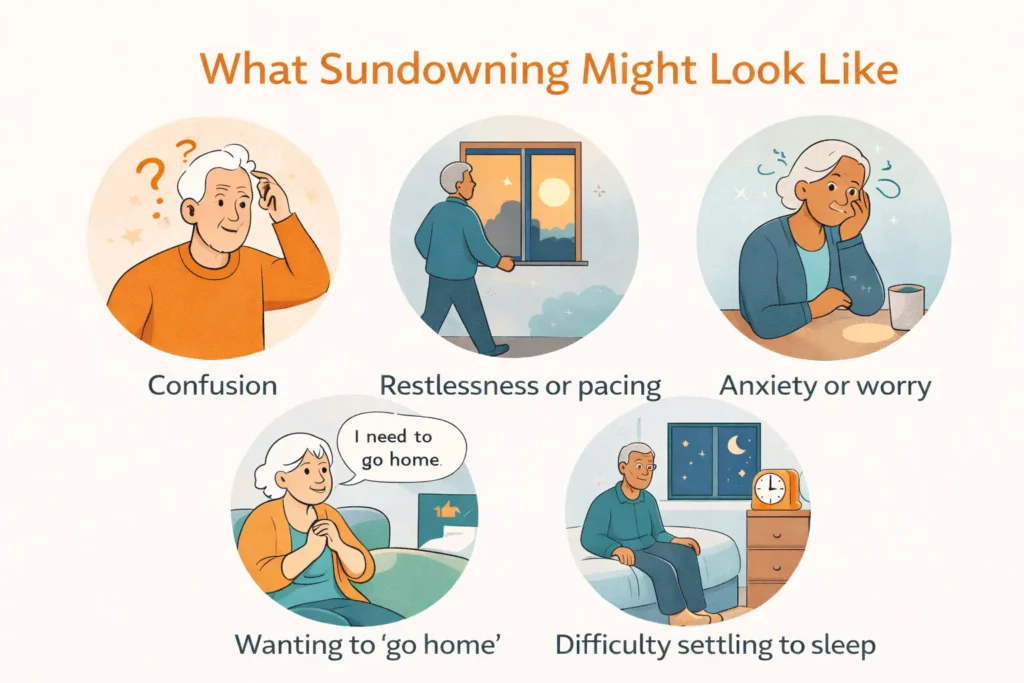
Sundowning looks slightly different for everyone, but there are some patterns people often notice. Common signs include:
- Becoming more confused about time or place
- Pacing or wandering around the home
- Appearing anxious or frightened
- Becoming irritated or angry
- Wanting to "go home" even when already at home
- Struggling to settle for the night
- Changes to sleep patterns
Some people may also experience hallucinations or delusions in the evening, which can feel very real and upsetting for them.
Seeing these changes can be difficult for anyone supporting someone with dementia, especially when it happens most evenings.
How Tracking Daily Patterns Can Help You Spot Sundowning Triggers
One of the most helpful things you can do is start looking for patterns. Sundowning often follows a rhythm, and noticing that rhythm can give you useful clues about what might be causing the distress.
It can help to keep a simple note for a week or two. You might write down:
- What time the behaviour usually begins
- What the day looked like beforehand
- When meals happened
- Whether there was a nap during the day
- Any changes in noise, visitors, or activity
Very often people notice that evenings become harder on days when the person is more tired, overstimulated, or hungry. Once you can see the pattern, small changes earlier in the day can sometimes make a big difference.
How Daytime Routines Can Help Reduce Sundowning Later in the Evening
One of the most effective ways to deal with sundowning symptoms is to think about the whole day, not just what happens in the evening. Small changes earlier in the day can reduce the pressure that builds up by late afternoon.
Keep a steady daily routine
A predictable routine can be very reassuring for someone living with dementia.
Try to keep things like wake-up times, meals, and bedtime happening at roughly the same time each day.
This helps the brain feel more oriented and secure.
Encourage gentle activity during the day
Light activity can help regulate energy levels and improve sleep later on. Activities that feel familiar and meaningful often work best. This might include:
- A short walk
- Gardening
- Folding laundry
- Listening to music
- Looking through photo albums
Spend time in natural daylight
Daylight helps regulate the body’s sleep cycle.
Even sitting by a window or spending a little time outside can help the brain recognise when it is daytime.
Keep naps earlier and shorter
Short naps can be helpful, but long naps late in the afternoon can make evenings harder.
Keep late afternoon calmer
As the day gets later, it often helps to slow things down a little.
Fewer activities, less noise, and a calmer environment can help prevent overwhelm.
Environmental Changes That Can Make Evenings Feel Calmer
The environment can also have a big impact on how someone experiences the evening. A few small adjustments can sometimes make a surprising difference.
Helpful changes might include:
- Turning lights on before it gets dark
- Closing curtains to reduce reflections
- Lowering background noise
- Keeping the room tidy and uncluttered
- Keeping familiar objects nearby
These small changes work, because they can make the space feel more predictable and easier to understand.
A Simple Evening Routine That Can Help Reduce Sundowning
Many people find that a gentle, predictable evening routine helps the brain start to relax. Doing similar things at roughly the same time each evening can help signal that the day is winding down. A routine might look something like this:
- A quiet activity after dinner such as music or looking through photos
- Turning on lights to keep the room evenly lit
- Reducing noise from televisions or devices
- Offering a warm drink or small snack
- Following familiar bedtime cues like changing into nightwear
What Can Help in the Moment When Sundowning Happens
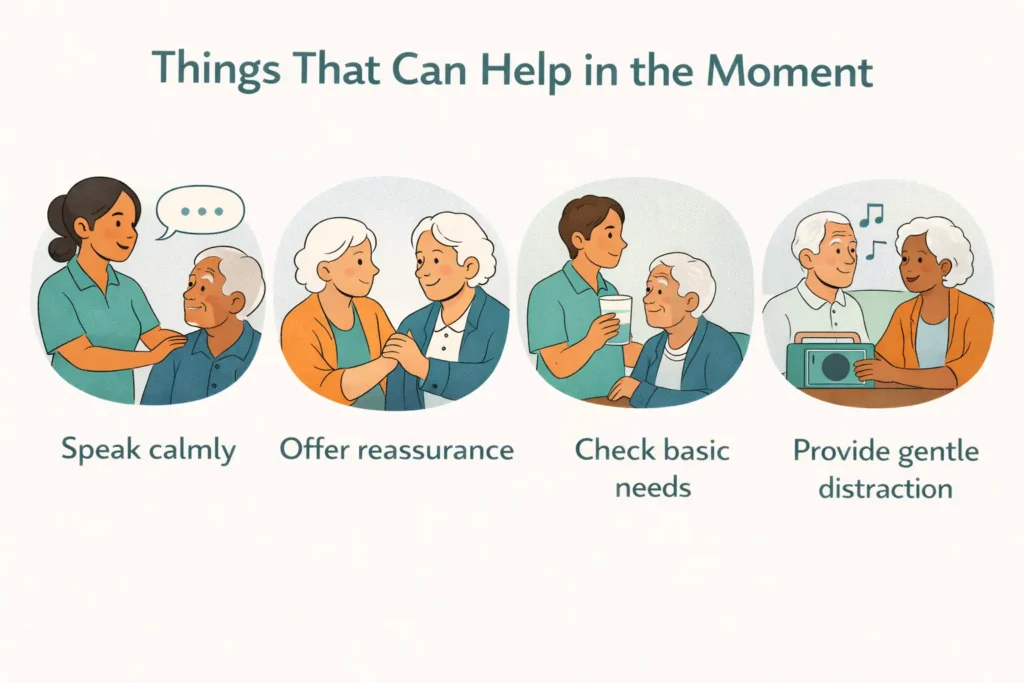
Even with preparation, some evenings will still feel difficult.
When that happens, it often helps to focus first on reducing stress rather than trying to correct the behaviour.
Stay calm
Your tone of voice and body language can strongly influence how the person feels.
Speaking slowly and calmly can help reduce tension.
Keep language simple
Long explanations can feel overwhelming.
Short, gentle sentences are often easier to process.
Check for physical needs
Sometimes there is a simple reason behind the distress.
It may help to check whether the person might:
- Be hungry or thirsty
- Need the toilet
- Be uncomfortable
- Be in pain
Meeting these needs can sometimes reduce agitation quickly.
Offer reassurance
A calm presence can be very grounding.
Simple reassurance like "You're safe" or "I'm here" can help the person feel supported.
Gently redirect attention
If the person remains distressed, it can help to gently shift attention to something familiar. Often the moment will pass once the person begins to feel calmer again.
This might be:
- Listening to favourite music
- Looking through photos
- Sitting quietly together
- Having a warm drink
When It May Be Helpful to Seek Medical Advice About Sundowning Symptoms
If sundowning symptoms are new, suddenly worse, or becoming difficult to manage, organisations such as Alzheimer’s Society and Dementia UK recommend starting with a GP or the person’s usual healthcare team.
A sudden change in behaviour is not always caused by dementia itself. It can sometimes be linked to other health problems that are common in later life and can make confusion worse. These can include:
- Pain or physical discomfort
- Urinary tract infections (UTIs) or other infections
- Constipation
- Poor sleep
- Dehydration
- Side effects from medication
A GP can check whether something physical may be contributing to the change. They may review medications, look for signs of infection, or suggest ways to improve sleep and comfort.
If the person is already known to local dementia services, the GP may also involve professionals such as:
- A Memory Clinic team, who can review dementia symptoms and treatment if needed
- A Community Mental Health Team for older people, who support people living with dementia at home
- An Occupational Therapist, who can suggest practical changes to routines or the home environment
- A specialist dementia nurse, such as an Admiral Nurse, who can provide guidance and support
In many situations, the most helpful approach is not medication but small practical changes — improving comfort, adjusting routines, supporting sleep, and reducing evening stress.
How Professional Dementia Care Can Help When Evenings Become Difficult
If evenings regularly feel overwhelming, having a little extra support can make a real difference - especially during the time of day when sundowning tends to start.
A Carer who understands dementia will often recognise the early signs that someone is becoming unsettled. That might be pacing, repeating questions, or seeming more anxious than usual. Responding early, in a calm way, can sometimes stop things from escalating.
For example, a dementia Carer might help by:
- Keeping the late afternoon slow and predictable
- Preparing food or drinks so hunger and thirst don’t build up
- Suggesting a short walk or gentle activity earlier in the day
- Turning lights on before the room starts to feel shadowy
- Offering reassurance if the person begins to feel worried or confused
Sometimes simply having another calm person in the room helps everything feel steadier. It can also take some pressure off the person who is supporting them day to day.
Support can be arranged in different ways depending on what feels most helpful.
Some people find that a few hours of dementia care at home in the late afternoon or evening makes the biggest difference, as this is often when sundowning begins. Others might benefit from live-in care, which provides consistent support throughout the day and night and helps keep routines steady.
Short-term respite care can also help if evenings have become particularly exhausting, giving the main supporter time to rest while making sure the person with dementia is still supported.
For many households, having the right support in place during the most difficult parts of the day can make evenings feel calmer and more manageable.
Bringing These Sundowning Strategies Together
Sundowning can feel unpredictable and exhausting, especially when evenings start to become unsettled more often.
But many of the things that help are surprisingly small. Looking at the whole day, keeping routines steady, reducing noise and stimulation in the evening, and responding calmly in the moment can all ease the pressure that builds up by late afternoon.
Often, small and steady changes make the biggest difference over time. And if evenings are still becoming difficult to manage, speaking with a GP or exploring extra support can help. You may also find it helpful to read our guide to dementia care, which explains what support looks like, how care can be arranged, and what to expect as needs change.
Frequently Asked Questions About Sundowning in Dementia
Download your free guide to dementia care..
Inside you’ll find clear explanations, practical tools, and step-by-step guidance to help make life easier for you and your loved one.

Jo joined Unique Senior Care as a Carer in 2011, transitioning from a nursing background. With 25 years of experience in health and social care, including mental health and children with disabilities, Jo has embraced numerous growth opportunities within the company.
Passionate about learning and development, Jo earned a Level 5 Diploma in this field and is committed to equipping teams with the skills needed for outstanding care.
Jo’s qualifications include advanced training in people handling, risk assessment, safeguarding, basic life support, first aid, health and safety, and dementia care. Jo has also completed numerous workshops and CPD courses, such as the SCIE’s Co-Production webinar.
These accomplishments reflect Jo’s dedication to fostering a culture of safety and excellence in care.