

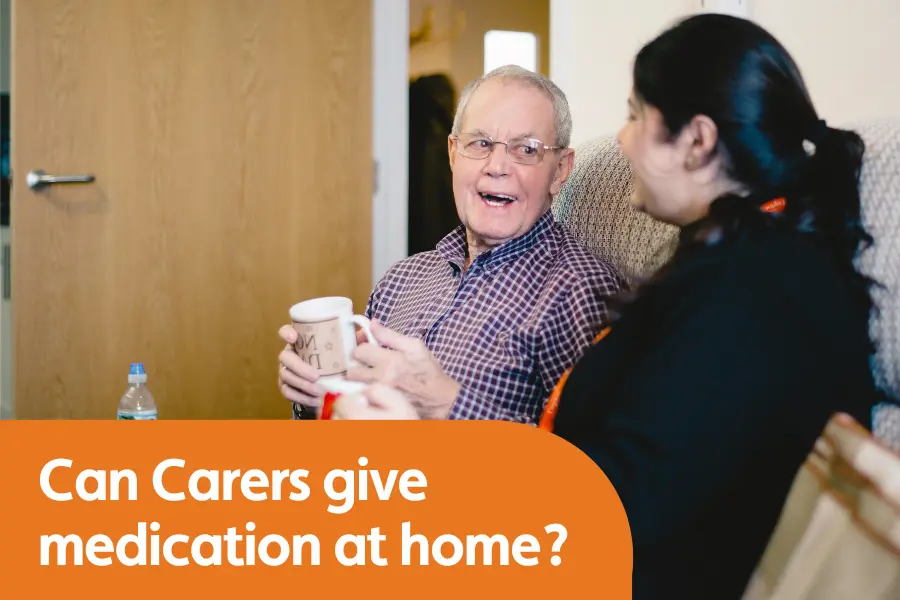
Summary: This blog explains what Carers can and can’t do when supporting with medication at home in the UK. It covers training, competency checks, practical safety tips, and when to seek professional help — with advice for families and those considering private home care.
One of the key areas elderly people may need support with as they age is medication. Often, with age comes a greater need for regular medicines, whether for managing long-term conditions, relieving pain, or supporting overall wellbeing. But as memory challenges and physical challenges such as arthritis in hands become more common, many older people need a little extra help remembering to take their medication safely and on time.
This blog explains what Carers can and can’t do when it comes to supporting with medication at home. We’ll also cover how they’re trained, how their competency is assessed, and what safe medication support should look like.
Can a Carer Give Medication at Home?
Yes, carers can give medication at home, but only within the boundaries of UK guidelines and as part of a clearly documented care plan. This is in line with CQC guidance on managing medicines in home care.
There’s an important distinction between:
- Prompting medication: Reminding or encouraging someone to take their medicines — as outlined in the NHS’s medicines tips for carers. This is suitable for individuals who are able to self-administer but may forget or need gentle support.
- Administering medication: Physically giving medicines, applying creams, or helping with inhalers. This level of support goes beyond prompting and involves directly handling medication. According to NICE guidance, this can only be carried out by Carers who have received the appropriate training, have been assessed as competent, and are authorised to do so by the care provider and outlined in the care plan.
In practice, Carers can only administer medication when this is clearly outlined in the care plan and falls within the boundaries of their training and assessed competence. This includes tasks such as administering prescribed tablets, topical creams, or inhalers — provided they have completed appropriate training and been assessed as competent to do so.
Training should follow recognised standards, such as the Care Certificate and Skills for Care medicines guidance. This ensures Carers understand how to support with medicines safely, how to maintain accurate records, and when to escalate any concerns.
Tasks outside of this scope, such as injections or medicines requiring clinical judgement, are not part of routine home care and should be carried out by qualified healthcare professionals.

What Carers Can Do
Trained Carers can:
- Prompt and remind someone to take their medicine
- Support with pre-prepared medication (e.g., dosette boxes or blister packs prepared by a pharmacist)
- Assist with eye drops, creams, patches, or inhalers
- Record medication using MAR (Medication Administration Record) charts
- Offer reassurance and monitor for side effects or adverse reactions
They always follow the individual care plan and work within the person’s consent and preferences.
What Carers Cannot Do (Unless Trained and Delegated)
To keep people safe, there are clear limits on what Carers are allowed to do when it comes to medication.
Carers should not:
- Give injections, such as insulin or vaccines. These are clinical tasks and are always carried out by a Registered Nurse or other healthcare professional.
- Crush tablets or open capsules, unless this has been specifically authorised by a pharmacist or prescriber, and is part of a formal best interests decision in line with the organisation’s policies. This should only happen where the person lacks capacity, and the need has been fully risk assessed, documented, and reviewed.
- Change prescribed medication routines, including doses, timings, or stopping medicines altogether.
- Make clinical judgments about whether a medication is working or should be altered.
In rare and highly controlled situations, a healthcare professional may delegate a specific clinical task. However, this is exceptional and not part of standard home care. For most families, injections and other clinical procedures will always be managed by a nurse or NHS professional, not a Carer.

How Competency Is Assessed
To ensure safe practice, Carers should be fully trained, and their competency thoroughly assessed before they ever support someone with medication. At Unique Senior Care, all new Carers complete a minimum of four days of in-person training as part of our screening and onboarding process (five days for our Live-in Carers). This includes full modules on safe medication handling, record-keeping, recognising side effects, and understanding different forms of medication. This initial training acts as a foundation for spotting practical strengths and identifying any areas that need further support.
After completing their core training, Carers do not go straight into a placement. Instead, they shadow experienced colleagues, observing safe practice and being observed in return. Only when we’re confident in their ability to support safely and compassionately do they begin working independently.
Competency assessments typically involve:
- Supervised practice under a senior team member
- Real-time observation of medication handling and communication
- Checks for accurate record-keeping using MAR charts
- Ongoing refresher training and support visits
This process mirrors best practice outlined in professional standards, such as the Skills for Care guidelines, which emphasise the importance of observation, training, and regular review.
By combining robust training with practical assessment, we make sure that every Carer is ready to provide safe, respectful support, and people can feel confident their loved one’s care is in capable hands.
Practical Safety Tips for Medication at Home
If you’re supporting a loved one at home, here are some essential safety tips that can help reduce risk and support wellbeing. This is particularly important when someone is living with dementia, as confusion, memory loss or reduced vision can make managing medication much more difficult.
In fact, many people tell us their first sign of a loved one needing more support is missed doses, mix-ups or reluctance to take tablets.
In the short video below, we share common challenges and simple solutions that can help ease medication confusion at home:
Our Top Tips for Managing Medication Safely at Home
- Use a dosette box or pharmacy-prepared blister pack to organise medicines by day and time. These tools make it easier to follow complex medication schedules and help avoid missed doses. Your local pharmacy can often prepare these for free.
- Store medicines safely, ideally in a locked or secure cabinet, and always out of reach of children or visitors. Make sure temperature-sensitive medicines are stored as advised on the packaging.
- Follow GP or pharmacist directions carefully, and don’t adjust medication without medical advice. Even seemingly harmless changes can have serious consequences.
- Never crush tablets or mix medicines without first checking with a medical professional. Some tablets are designed to be released slowly, and crushing them can alter how the drug works in the body.
- Keep a written or digital record of what’s been taken and when. This helps avoid accidental double-dosing and is useful information for GPs or emergency services if something goes wrong.
- Ask about simplifying routines. If medications feel unmanageable, speak to a pharmacist or GP — they may be able to combine medications, change timings, or offer long-acting alternatives that reduce the daily burden.
Even small steps like clearer labelling, setting reminders, or involving a trusted Carer can make a big difference in staying safe with medication at home.
When to Get Help from a Healthcare Professional
Medication management at home can feel overwhelming at times — especially if you’re unsure whether something is normal or needs medical attention. If in doubt, it’s always safer to speak to a professional.
You should contact a GP, pharmacist, or community nurse if:
- A loved one regularly refuses or forgets to take essential medication
- You notice side effects, allergic reactions, or sudden changes in their health
- You’re unsure about how or when to give a medicine, including dosage or timing
- A medication error has occurred, such as a missed dose or accidental double dose
It’s also a good idea to seek advice if medications seem confusing, are difficult to administer, or if your loved one’s condition or prescriptions have recently changed. The NHS 111 service can offer quick support when you’re not sure who to speak to.
If these challenges are happening regularly, it might be time to consider more consistent support. A professional home Carer can take the stress out of medication routines, offering practical help while also keeping your loved one safe and well. Many people find that private home care provides the peace of mind they need, especially when medication support is part of a wider care plan tailored to their loved one’s needs.
Safe, Supportive Medication Care at Home
Medication is just one part of staying well as we age, but it’s often the part that causes families the most worry. Whether it’s missed doses, confusion, or managing multiple prescriptions, you don’t have to handle it alone.
Professional home Carers can provide gentle, reliable support with medication as part of a wider, personalised care plan. From prompting and reassurance to full administration where needed, the right help can bring confidence, calm, and continuity to your loved one’s daily routine.
If you’re unsure what level of support is right, we’re here to talk it through. Whether you’re just exploring options or ready for a little extra help at home, just get in touch – our team is always happy to listen.
References:
- CQC: Managing medicines in home care
- NHS: Medicines tips for carers
- NICE guidance
- Skills for Care: Medicines competency assessment guide
- Find a local pharmacy
- Can tablets be crushed or capsules opened? – NHS SPS
- NHS 111 service

With over 40 years of experience in the care industry, providing outstanding care has always been Helena’s core mission.
Helena has been a dedicated member of Unique Senior Care for eight years, starting as Care Manager and advancing to Head of Extra Care and now serving as Director of Operations.
She holds a Level 5 Diploma in Leadership for Health and Social Care and Children and Young People’s Services (England), as well as a Diploma in Welfare Services. Helena has completed various leadership and management courses, enhancing her expertise in the care industry.
Helena has authored published articles, including one for Skills for Care on managing change through the COVID pandemic. She has a steadfast commitment to advocating for and supporting those in need, ensuring their voices are heard and their rights upheld.