

A walking stick is a useful way to support balance and make everyday movement safer. It can help someone stay steady on their feet and feel more confident getting around. Whether you’re learning to use one yourself or helping a family member, this guide walks through the basics—step by step—to reduce the risk of falls and support safer movement.
Why It’s So Important to Use a Walking Stick Properly
A walking stick isn’t just something to lean on. If it’s used in the right way, it can:
-
Support balance and help prevent falls
-
Encourage a steadier, more natural walking pattern
-
Make day-to-day tasks easier to manage
-
Help someone feel more able to get around on their own
Knowing how to use a stick properly can make everyday activities feel more manageable, both for the person using it and the person supporting them.
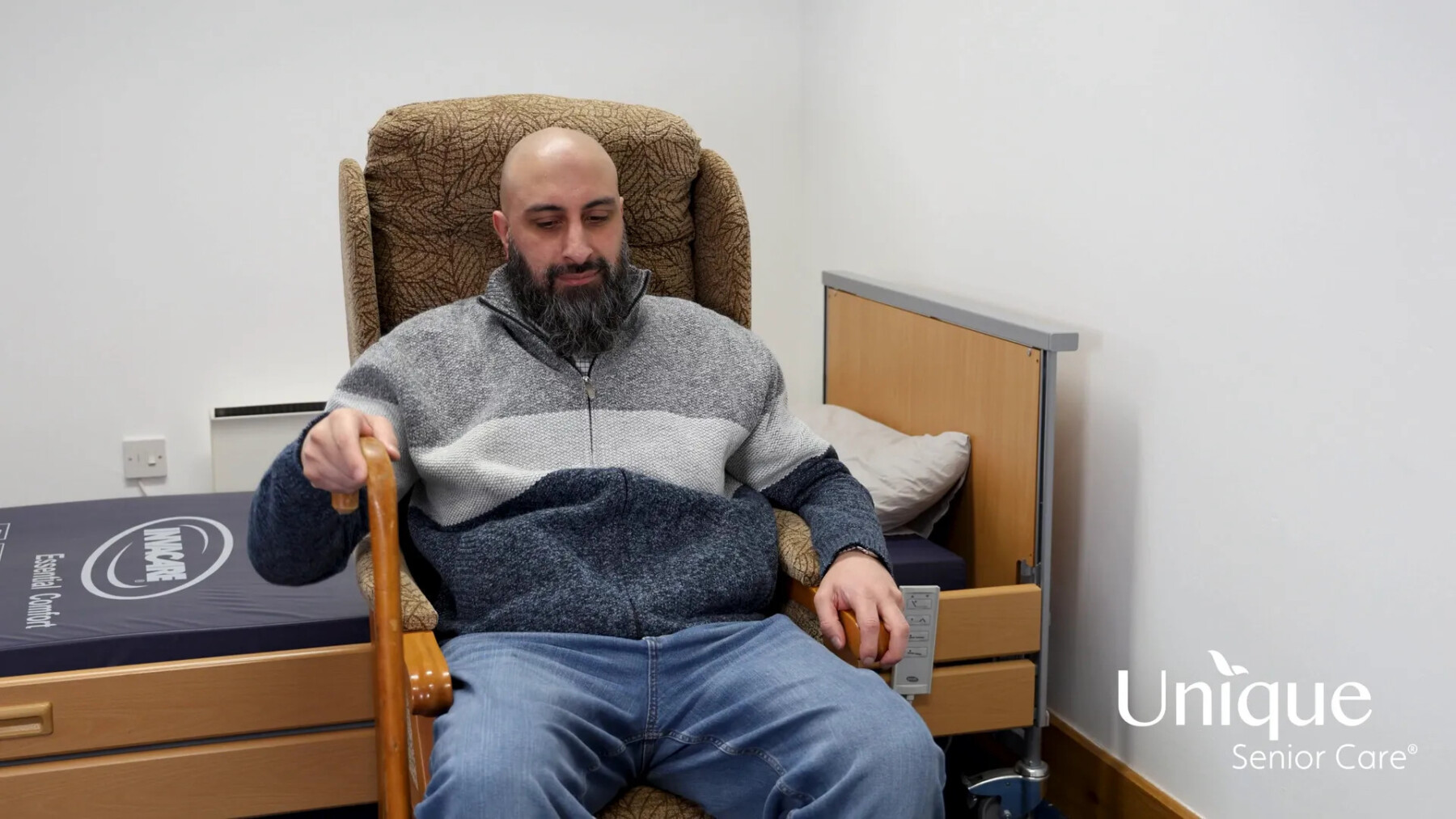
Which Hand Should Hold the Stick?
This is one of the most common questions, and it matters more than people often realise. The walking stick should be held in the hand opposite the weaker or more painful leg. So if the left leg is affected, hold the stick in the right hand.
This helps with balance and makes walking feel more stable.
How to Stand Up with a Walking Stick
Getting up from a chair safely takes a bit of care. Here’s how to do it:
-
Lean forward slightly so your weight is over your stronger leg.
-
Use the arm of the chair to push yourself up—don’t use the stick for this.
-
Once you’re balanced, bring your hand onto the stick handle.
This helps you stand up without wobbling or putting strain on the stick.
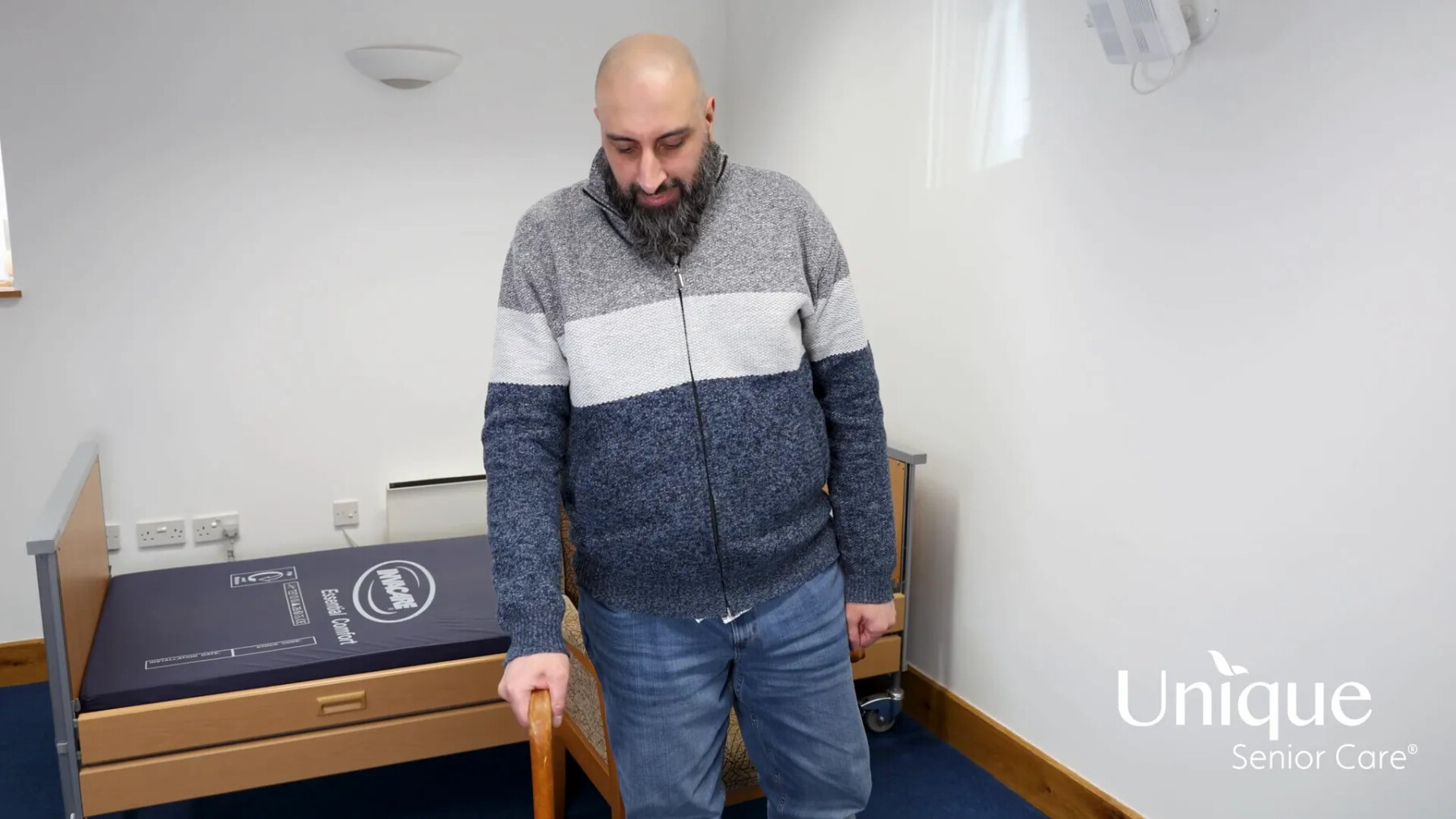
Checking the Height Is Right
A stick that’s too tall or too short can make walking uncomfortable or unsteady. The top of the stick should line up with your wrist when you’re standing straight with your arms by your sides.
That way, your arm is slightly bent when holding the stick, which makes it easier to use and helps with balance.
How to Walk with a Stick
Once you’re standing up and steady, here’s how to walk with the stick:
-
Keep the stick on your stronger side.
-
Move the stick forward first—roughly a step’s length and slightly out to the side.
-
Step forward with your weaker leg, putting a bit of weight on the stick for support.
-
Then bring your stronger leg forward.
This helps keep your steps steady and stops the stick from getting in the way.
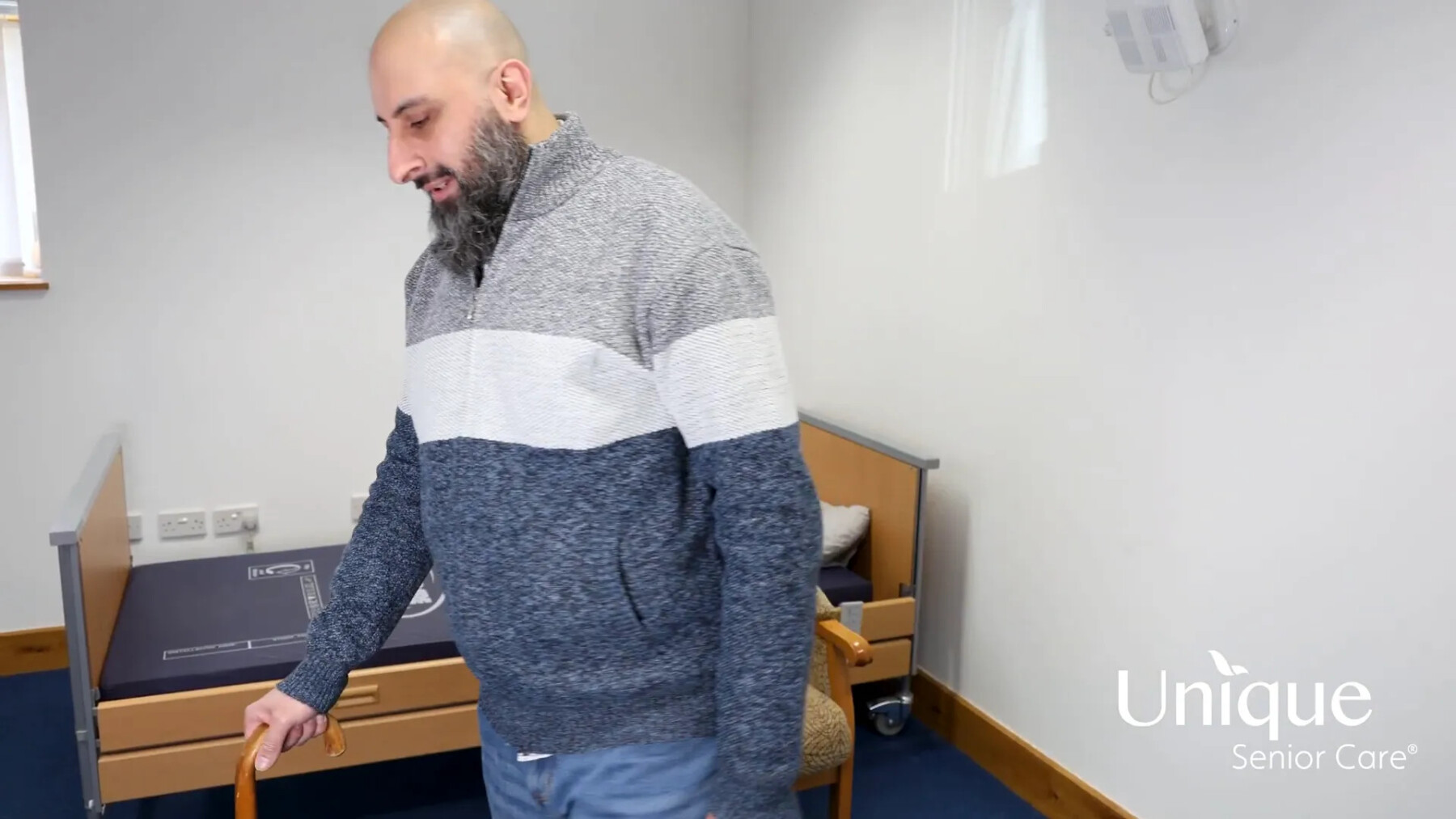
Turning Around Safely
Turning around with a walking stick needs a little extra care:
-
Turn slowly until the back of your legs are touching the chair.
-
Keep the stick in front of you and avoid stretching it too far.
-
Reach down for the armrest with your free hand.
-
Lean forward slightly and lower yourself into the chair.
Taking your time and keeping the stick close helps you stay balanced.
Sitting Back Down
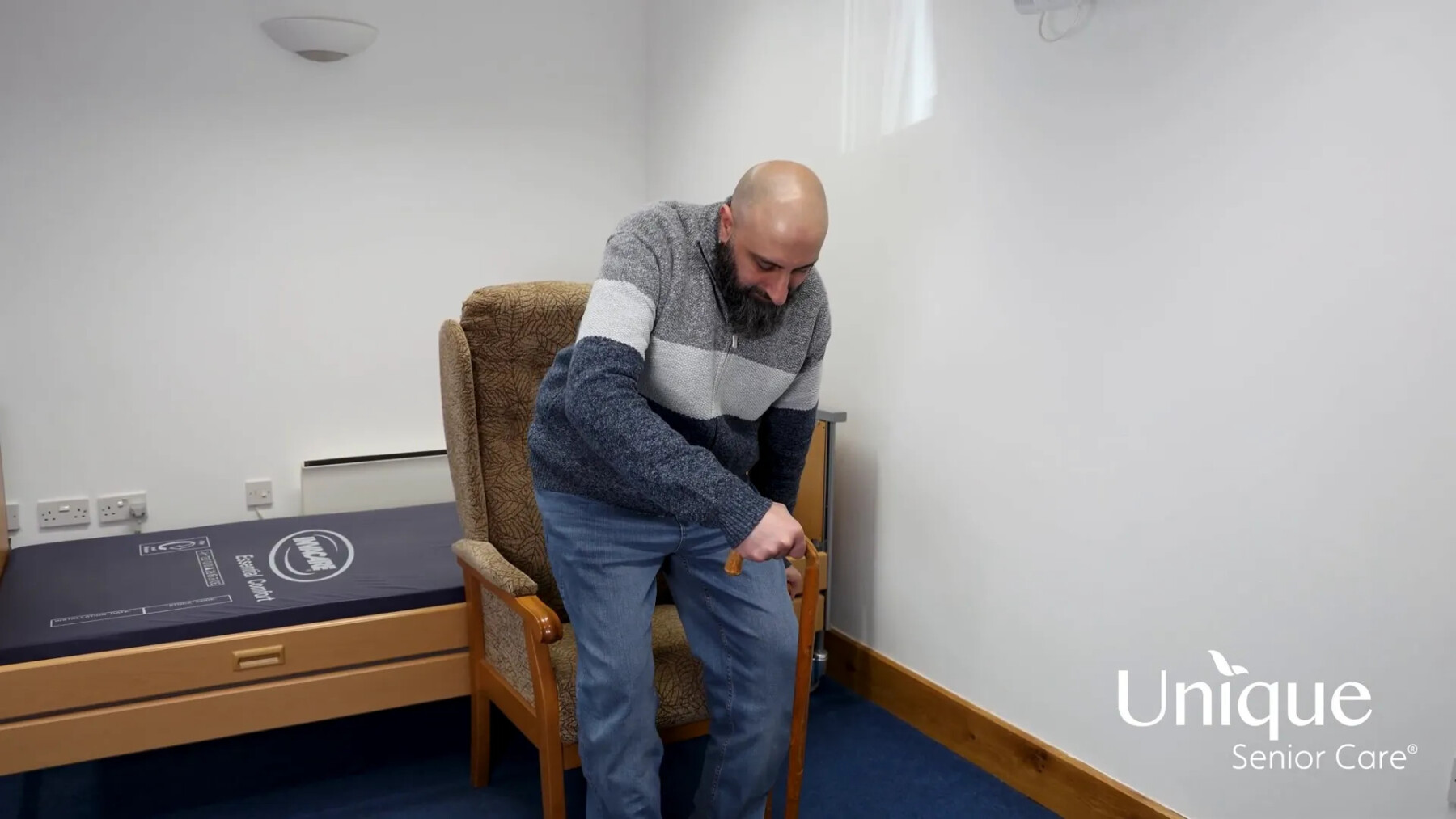
Lowering yourself into a chair is just as important as standing up. Here’s what to do:
-
Put the stick in front of you.
-
Reach for the armrest with your free hand.
-
Lean forward a little, then gently lower yourself into the chair.
Don’t rush this step—staying in control helps avoid slips or loss of balance.
Making Walking Safer and Easier
Used correctly, a walking stick can help someone stay safer and feel more supported when moving around. These small techniques make everyday activities like walking, standing up, and sitting down easier and more stable.
If you’re unsure whether a walking stick is set up properly, it’s a good idea to ask a healthcare professional—such as a Physiotherapist—for guidance. They can help check that it’s the right fit and that it’s being used in a way that’s safe.
For more resources and guidance, explore our Learning Centre for expert advice and tips.
FAQs: Using a Walking Stick Correctly
Discover More Support & Information For Your Care Journey
Visit our Learning Centre for expert articles, helpful videos, in-depth guides, and answers to common questions - helping you make informed care decisions with confidence.
Explore Now
Jo joined Unique Senior Care as a Carer in 2011, transitioning from a nursing background. With 25 years of experience in health and social care, including mental health and children with disabilities, Jo has embraced numerous growth opportunities within the company.
Passionate about learning and development, Jo earned a Level 5 Diploma in this field and is committed to equipping teams with the skills needed for outstanding care.
Jo’s qualifications include advanced training in people handling, risk assessment, safeguarding, basic life support, first aid, health and safety, and dementia care. Jo has also completed numerous workshops and CPD courses, such as the SCIE’s Co-Production webinar.
These accomplishments reflect Jo’s dedication to fostering a culture of safety and excellence in care.