

Getting older comes with a lot of changes. Some are expected, like needing a bit more rest. Others can sneak up, like feeling lonelier than you used to or realising that the days feel quieter than you’d like. Whether you're exploring care for yourself or someone you care about, it’s completely normal to feel unsure about what’s needed.
Most people think of care as things like cooking, personal care, or medication reminders. And yes, those things are important. But there’s another part that’s just as vital. It’s the emotional side. The feeling of having someone nearby to chat to and share the little things, especially if you live alone or the house has felt a little too quiet lately.
Often, we talk a lot about the practical side of care but, in this blog, we're looking at the emotional side of care. The kind that helps older people feel connected, heard, and seen. A live-in Carer isn’t just there to do tasks, they’re there to sit beside you, have a laugh and check in when the day feels off. They can provide emotional support that's just an important as helping with the day to day.
Whether you’re thinking about this for yourself or an older loved one, we’ll explore how emotional care can make such a big difference to the well-being of older adults - helping seniors feel less alone, more confident, and more like themselves again.
Why Emotional Support for Elderly People Matters
As we get older, life throws up emotional challenges just as much as physical ones. Losing a partner, feeling less mobile, or simply having fewer people to talk to can be mentally tough. For many older adults, these feelings build up quietly and begin to impact their mental and emotional health in ways that aren’t always obvious at first. They might start withdrawing from social circles, become more anxious about leaving the house, or find it harder to take care of themselves like they always have.
This is why emotional care matters. It goes above and beyond doing things for someone; it's making sure their mental health is taken care of too, whether that's with some gentle reassurance, a familiar routine, their favourite hobbies, or a chat over breakfast. These simple things help older adults maintain a sense of self and can keep them confident and active.
And yet, this kind of support can often be missed in more clinical care services when time is so precious. But the truth is, we all need a little emotional support, and that doesn’t stop as we age.
How Emotional Well-Being Impacts Physical Health
When life slows down, it’s easy to start feeling cut off. You might miss the little chats, the regular visits, or just hearing another voice in the house. Feeling emotionally out of sorts can knock your whole system off balance. You might feel tired, lose your appetite, or stop wanting to do the things you used to enjoy. These are real signs of emotional strain and they can lead to more serious issues, like depressive symptoms in older people.
And you wouldn’t be alone in feeling that way. In fact, in the UK, around 940,000 older people aged 65 and over often feel lonely and 9 in 10 of them also say they feel unhappy or depressed.
But when we address the emotional needs gently and consistently, it can have a big impact. Confidence grows. Motivation comes back. People start to feel more like themselves again. That’s why emotional care is so powerful, as it supports both the mental and physical health of the person receiving it. To put it bluntly, emotional support is essential to the health and well-being of anyone, especially those who are older and may be feeling the weight of change.
How Live‑in Carers Provide Emotional Support
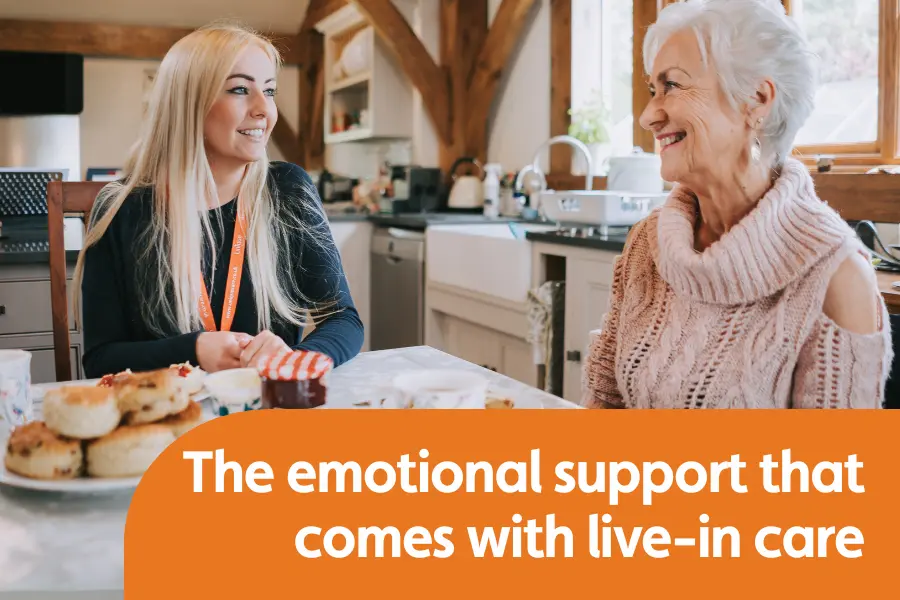
A live-in Carer isn’t just there to help with tasks. They’re someone to talk to, laugh with, and simply share the day with. For older adults living alone or feeling disconnected, that kind of steady companionship brings comfort and a sense of normality.
What makes a difference is how a Carer notices the little things — how you take your tea, the music you like in the morning, or when you just need a bit of quiet. They also notice when something feels off, when you're quieter than usual, or just not quite yourself.
This is especially important for people living with dementia, who may not always be able to express how they’re feeling. A familiar face, a calm routine, and someone who understands how to respond with empathy can help ease anxiety and build trust day by day.
These thoughtful touches help meet the emotional needs of seniors, not through big gestures, but through kindness, familiarity, and care that feels personal. Over time, these everyday moments build something deeper: trust, confidence, and emotional stability. A gentle nudge to get some fresh air, sharing a favourite story, or simply sitting together in silence can help someone feel more like themselves.
This is the heart of instrumental support — the kind that supports emotional wellbeing just as much as practical needs. It’s what really helps seniors feel safe, settled, and understood.
One of our live-in Carers, Anne, talks beautifully about what this really looks like in everyday care. She shares how it’s not about doing anything big, it’s the simple routines, the gentle tone, and being there consistently that makes the difference.
She shares how she cared for a lady with dementia who didn’t remember her name, but always recognised her voice and the sound of the curtains being opened. That familiarity and warmth helped the lady feel calm and safe. Anne’s story shows just how powerful emotional support can be when it’s personal and consistent.
Examples of Emotional Support a Live-in Carer Can Provide
- Regular companionship and someone to talk to
- Encouragement to keep up with hobbies and interests
- Support with maintaining a calm, comforting routine
- Noticing changes in mood or behaviour
- Helping keep in touch with family or friends
- Gentle reassurance on difficult or anxious days
Care That Supports Families, Too
Worry has a way of creeping in, especially when you’re caring for someone you love or wondering if you might need a bit more support yourself. You might be lying awake at night thinking, "Are they coping? Are they lonely?" Or maybe you’re feeling a bit lost yourself and unsure where to turn.
Having a live-in Carer can lift some of that weight. It’s knowing there’s someone who’s really there. Someone who notices when things feel off, who chats with you over lunch, who remembers how you like your tea. That kind of support doesn’t just help day to day, it brings comfort to everyone involved. Families feel less stretched. You feel less alone. And life starts to feel a bit more manageable again.
Julie, whose mum Rita lives with Alzheimer's, shared her experience of moving from a care home to live-in care. Rita hadn’t been sleeping or eating well and felt overwhelmed by all the people and noise. “Her personality completely changed in the care home,” Julie shared. “But once we brought a Carer in, things changed. She was calmer, sleeping better, eating better. She just seemed more like herself again.”
What helped most was the one-to-one support — someone getting to know her properly, noticing her moods, and giving her space to do things in her own time. “Now I can sleep again too, knowing she’s safe in her own home, with her own things around her,” Julie said. “And I’m not lying awake wondering how she’s coping.”
Unlike a care home, live-in care wraps around the person and their way of life. Everything happens in their own space, at their own pace, with one familiar Carer who gets to know them properly — not just their care needs, but their personality too. That kind of consistency and familiarity can make all the difference, especially for someone who’s struggled to settle in a communal setting.
You can hear more from Julie in her own words here:
Bringing It All Together: The Emotional Value of Live‑in Care
We’ve looked at how emotional support can lift someone’s mood, restore confidence, and ease the quiet weight of loneliness. But at its core, live-in care is really about one thing - helping someone feel like themselves again.
That could mean sticking to a familiar routine, sharing a chat over lunch, or simply having someone nearby who understands when something’s not quite right. It’s these small, steady moments that rebuild trust, boost wellbeing, and bring calm back into everyday life.
Whether you’re exploring care for yourself, a partner, a parent or another older loved one, knowing they’ll be seen, heard and supported emotionally can be a huge relief. And it’s often the thing families are most grateful for.
Because emotional care isn’t extra. It’s essential. And it’s what makes live-in care so powerful.
Ready to Talk About Live-in Care?
If you’re thinking about whether live-in care might be the right step — for yourself or someone close to you — we’re always happy to chat it through. You don’t need to have all the answers or know exactly what you’re looking for.
We’re here to listen, talk things through, and help you understand what support could look like. Whether it’s now or sometime down the line, just reach out when you’re ready.
Speak to our friendly team — we’d love to help if we can.

Sophie Ledbrooke is Head of Live-In Care at Unique Senior Care and brings nearly two decades of experience in the care sector, having started her career in 2006. She holds a Level 5 Diploma in Health and Social Care and plays a pivotal role in supporting Care Managers to deliver safe, high-quality, and person-centred services.
Sophie’s work spans strategic development, compliance, and ensuring exceptional journeys for both clients and caregivers. Deeply fulfilled by the positive impact of her work, Sophie also volunteers as a Special Constable with Warwickshire Police and enjoys motorsport, documentaries, and time with family and friends