

Summary: Advanced dementia symptoms can include weight loss, swallowing difficulties, incontinence, reduced communication, behavioural changes and increasing dependence on others for everyday tasks. One of the most confusing aspects for families is that someone may still appear physically capable while experiencing severe cognitive decline. This guide explains the common signs of late stage dementia, why symptoms can sometimes seem contradictory, and practical ways to support a loved one with dignity, comfort and appropriate care.
One of the most confusing things about late stage dementia is that it often doesn't look the way people expect. Your loved one may still be walking around the house, making a cup of tea, or appearing physically strong. Yet at the same time, they may need help with washing, dressing, eating, using the toilet, or understanding what is happening around them.
Families often tell us they feel as though they're seeing two different realities at once. How can someone seem physically capable while needing so much support? The truth is that advanced dementia rarely follows a neat or predictable pattern.
In this guide, we'll explain what late stage dementia can look like, the symptoms families commonly notice, why some changes can seem contradictory, and practical ways to support someone you love with comfort, dignity and compassion.
What Is Late Stage Dementia?
For many families, there comes a point where dementia starts to affect almost every part of daily life. Your loved one may need help with eating, drinking, washing, dressing, using the toilet, taking medication and staying safe at home. They may also need more reassurance, supervision and support than they did before.
This is often what people mean when they talk about late stage dementia or advanced dementia. Rather than describing one specific symptom or moment in time, these terms describe a stage where a person becomes increasingly dependent on others for day-to-day support. Many families find that support from professional Caregivers, Live-in Care, or residential services becomes increasingly important during this stage.
Families often use the terms late stage dementia, advanced dementia and end stage dementia interchangeably. While they overlap, they are not always describing the same thing.
A person can be living with advanced dementia, need full-time support, and be highly dependent on others without being in the final days or weeks of life. This distinction matters because many families understandably hear the words "late stage" and immediately fear the worst.
There is an important difference between later-stage dementia and the signs that someone may be approaching the end of their life. Understanding that distinction can help families focus less on labels and more on making sure their loved one receives the support, comfort and dignity they need.
How Long Does Late Stage Dementia Last?
This is one of the questions families ask most often, and unfortunately there is no straightforward answer. Some people live with advanced dementia for only a few months, while others continue living with it for several years. As guidance on the later stages of dementia explains, there is no single path that everyone follows.
That uncertainty can be difficult for families. It's natural to want answers about what comes next and how much time may be left. However, focusing on a timeline is often less helpful than focusing on what your loved one needs right now. Are they comfortable? Are they eating and drinking safely? Do they seem distressed? Is the support around them still meeting their needs?
While dementia follows a progressive course, the pace of change is rarely predictable. What's most important is making sure your loved one has the right support in place to remain safe, comfortable and as well cared for as possible.
Why Someone Can Seem Physically Capable Yet Have Advanced Dementia
One of the most confusing aspects of late stage dementia is that physical ability and cognitive ability don't always decline at the same pace.
Many families tell us they struggle to make sense of what they're seeing. Their loved one may still be walking around the house, climbing stairs, helping with simple tasks, or appearing physically well in many ways. Yet at the same time, they may struggle to communicate their needs, recognise risks, make decisions, follow everyday routines, manage medication, or understand what is happening around them.
If this sounds familiar, its because dementia affects different parts of the brain at different times. Changes linked to memory, communication, decision-making, awareness and recognising bodily needs can become severe before the areas responsible for movement are significantly affected.
You can read more about the different types of dementia and how they affect the brain and how mental, physical and speech abilities can change at different rates in later-stage dementia.
Mobility is also influenced by other factors, including a person's general fitness, eyesight, balance, medication and other health conditions. This means someone may still be physically active while needing extensive support with washing, dressing, eating, toileting, communication and staying safe.
If you're struggling to make sense of this, you're not alone. Many families worry that their loved one can't really have advanced dementia because they are still walking, climbing stairs or appearing physically strong. In reality, this pattern is far more common than people realise. Physical abilities and cognitive abilities do not always decline at the same pace.
Physical Signs of Late Stage Dementia
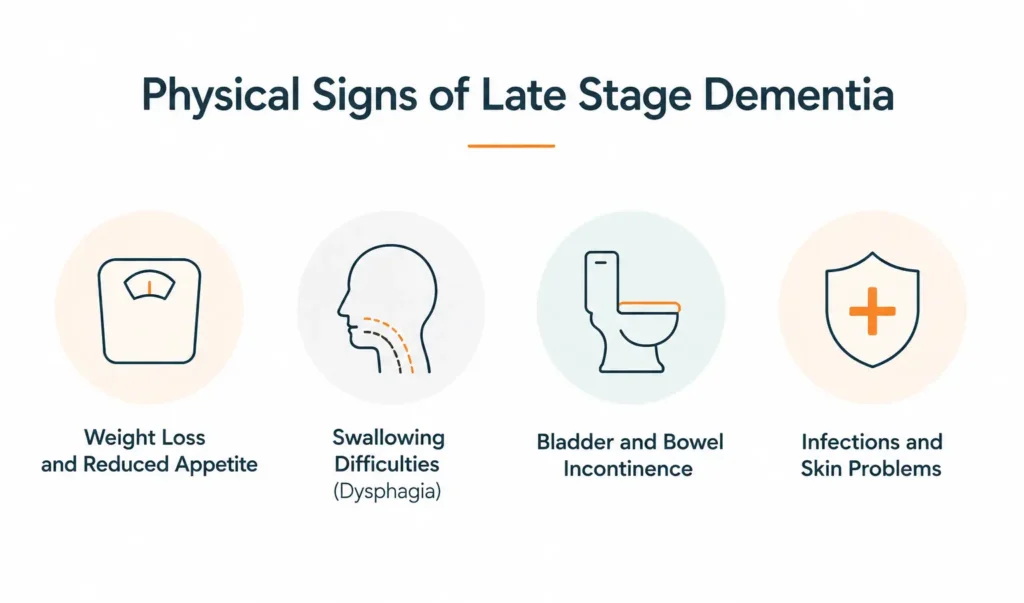
Weight Loss and Reduced Appetite
Eating and drinking can become much more difficult in the later stages of dementia. Your loved one may no longer recognise food or drink, forget how to use cutlery, struggle to focus on a meal, or simply lose interest in eating altogether.
Weight loss can also be linked to pain, constipation, mouth problems, difficulty chewing or problems with swallowing. It can be difficult to know whether someone is in pain when they can no longer explain how they feel. Changes in appetite, behaviour or mood can sometimes be one of the first signs that something isn't right.
If someone is losing weight without trying to, it's always worth discussing this with their GP, as it can increase the risk of infections, weakness and falls.
Swallowing Difficulties (Dysphagia)
Swallowing problems become more common in advanced dementia and can make eating and drinking tiring, uncomfortable or unsafe.
Signs to look out for include:
- holding food or saliva in the mouth
- chewing for a long time without swallowing
- coughing or choking during meals
- a wet or gurgly-sounding voice after eating or drinking
- drooling
- bringing food back up
- more frequent chest infections
If you notice any of these signs, speak to your GP. They may refer your loved one to a Speech and Language Therapist, who can assess swallowing and recommend ways to make eating and drinking safer. A Dietitian can also help ensure meals remain nutritious and enjoyable if food textures need to be adapted.
Bladder and Bowel Incontinence
Loss of continence becomes more common as dementia progresses, but it should never automatically be dismissed as "just part of the dementia".
Your loved one may struggle to recognise the urge to use the toilet, forget where the bathroom is, or find it difficult to communicate their needs in time. However, there can also be treatable causes behind a sudden change, including urinary tract infections, constipation, prostate problems and medication side effects.
If continence problems are new or worsening, ask the GP for a review. NHS continence services, District Nurses and continence specialists can also provide valuable practical support.
Infections and Skin Problems
Advanced dementia can increase a person's vulnerability to infections and other health complications. Swallowing difficulties can allow food or liquid to enter the airway and cause chest infections. Weight loss can make it harder for the body to fight illness. Wet or soiled skin may become sore or develop fungal infections if it isn't cleaned and dried promptly.
These complications are not inevitable, but they do highlight the importance of attentive, consistent care and regular health reviews.
Behavioural and Communication Changes in Advanced Dementia
Changes in behaviour can sometimes be linked to pain, hunger, thirst, constipation, tiredness, fear, confusion, infection, medication changes or simply feeling overwhelmed by noise and activity. Guidance on managing distress in dementia highlights the importance of looking for an underlying cause rather than assuming a behaviour is simply part of the condition.
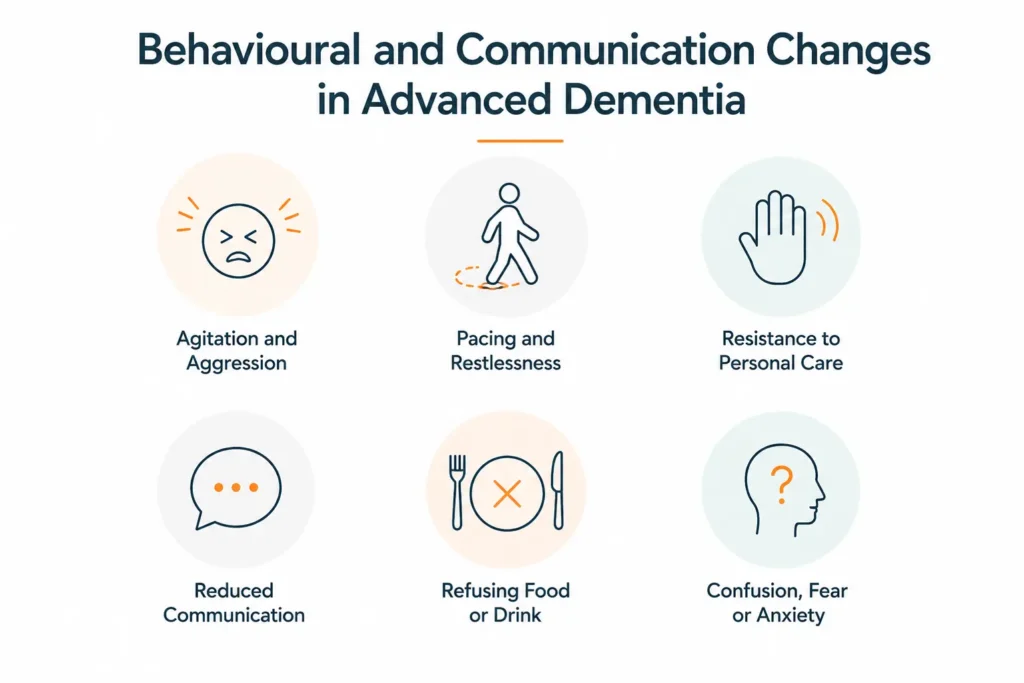
Understanding Common Behaviour Changes
Aggression, agitation and resistance to care are often signs that something doesn't feel right to the person experiencing them.
For example:
- Aggression may be linked to pain, fear or feeling threatened.
- Pacing and restlessness can sometimes indicate discomfort, boredom, anxiety or an unmet need.
- Pulling at clothing may be a sign that someone is too hot, too cold or physically uncomfortable.
- Refusing food may be linked to mouth pain, swallowing difficulties, nausea or changes in taste.
- Spitting food or saliva can sometimes indicate mouth discomfort, dry mouth, denture problems or difficulty swallowing.
You can learn more about the impact of oral health on eating, comfort and behaviour in this guide to dental and mouth care in dementia.
If behaviours are new, becoming more severe, or appear suddenly, it's important to seek medical advice rather than assuming the dementia has simply progressed.
If someone becomes suddenly much more confused, distressed or different over the course of hours or a day or two, this may be delirium. Delirium is a medical emergency and should be assessed urgently.
Why Personal Care Can Become So Difficult
Many families are surprised when washing, dressing or toileting suddenly become a source of distress. From the outside, it can look as though a loved one is being stubborn or refusing help. In reality, personal care can become frightening and confusing for someone living with advanced dementia.
They may not understand why their clothes are being removed. They may believe they have already washed. They may not recognise the person helping them, or they may simply feel embarrassed, vulnerable or overwhelmed.
Guidance on washing and dressing with dementia explains that memory problems, changes in perception and difficulties following sequences of steps can all contribute to distress during personal care.
When Words Become More Difficult
As dementia progresses, spoken language often becomes more limited. Some people may only use a few words, while others may stop speaking altogether. That doesn't mean communication has ended.
Facial expressions, body language, sounds, eye contact and touch can all remain powerful ways of connecting. Guidance on non-verbal communication and dementia highlights how reassurance, tone of voice and gentle touch can still provide comfort, even when words become difficult.
Many families find that although conversations change, meaningful moments of connection can still remain.
Practical Ways to Support Someone with Late Stage Dementia at Home
There is no perfect way to care for someone with advanced dementia, and what works one day may not work the next. However, many families find that the most helpful approach is to stay calm, stay curious and focus on what the person may be trying to communicate.
Instead of asking, "How do I stop this behaviour?", try asking, "What might my loved one need right now?" That small shift in thinking can often make difficult situations feel much more manageable.
During Personal Care
- Keep your voice calm, warm and unhurried, and explain each step before you do it.
- Offer simple choices where possible, such as which towel or item of clothing they would prefer, to help maintain a sense of control.
- Make sure the room is warm and private, as feeling cold or exposed can quickly increase distress.
- If a bath or shower causes anxiety, consider a sponge wash instead. Many people find this feels less overwhelming. You can find more advice on washing, bathing and showering with dementia.
- Where possible, maintain consistency with the people providing personal care.
- Consider whether your loved one may feel more comfortable receiving care from a Carer of the same gender.
Supporting Eating and Drinking
- Keep mealtimes calm, quiet and unhurried.
- Offer smaller amounts more frequently rather than large portions that may feel overwhelming.
- Make sure your loved one is sitting upright before eating or drinking.
- Pay attention to oral comfort, as sore gums, mouth ulcers or dental problems can affect appetite.
- If swallowing is becoming difficult, seek advice from a Speech and Language Therapist rather than trying to manage alone.
- Do not restrict fluids to manage continence, as dehydration can often make urinary problems worse.
Managing Continence
- Choose easy-to-remove clothing to reduce delays when your loved one needs the toilet.
- Keep the route to the bathroom clear, well-lit and easy to recognise. Visual cues can sometimes help. Age UK provides additional continence advice for families supporting someone with dementia.
- Offer regular, gentle reminders to use the toilet rather than waiting for your loved one to ask.
- Use continence products where needed, but clean and dry the skin promptly after accidents.
- Watch for redness, soreness or signs of fungal infection and seek treatment early.
When to Seek More Support
Caring for someone in the later stages of dementia can be physically demanding, emotionally draining and, at times, overwhelming. Many family carers find themselves trying to balance caring responsibilities alongside work, relationships, their own health and everyday life.
If you're finding it difficult, that doesn't mean you're doing anything wrong. It means you're facing one of the most challenging situations a family can experience. Many family carers feel the strain of supporting someone with dementia.
57%
of unpaid carers say they feel overwhelmed often or always
35%
describe their mental health as bad or very bad
According to Carers UK, these figures reflect a reality shared by thousands of families. If you're finding things difficult, you're certainly not alone.
There are also times when it's important to seek professional advice rather than trying to manage alone.
- New or worsening swallowing difficulties – ask your GP about a referral to a Speech and Language Therapist.
- Significant or ongoing weight loss – speak to your GP and consider whether support from a Dietitian may help.
- New incontinence or a sudden change in continence – ask for a review to rule out infections, constipation, medication side effects or other treatable causes.
- A sudden change in behaviour over hours or a day or two – seek urgent medical advice, as this may be a sign of delirium.
- Oral pain, refusal of food or unusual behaviours around eating – speak to your GP, dentist or Speech and Language Therapist.
- Signs of significant pain or distress – ask your GP or specialist team for advice on pain assessment and management.
- Your own health, sleep or wellbeing is being affected – consider a carer's assessment, respite care, additional home care support or speaking to your GP.
You don't have to do this alone. Asking for help isn't a sign that you're no longer coping. It's often the best way to make sure both you and your loved one receive the support you need.
If you'd like specialist dementia advice, the Dementia UK Admiral Nurse Helpline offers free guidance for families affected by dementia. You can also contact the Alzheimer's Society Dementia Connect support line for practical information and emotional support.
Supporting Someone Through Advanced Dementia
Advanced dementia can be difficult to make sense of, particularly when someone appears physically capable but is increasingly unable to manage everyday life independently.
Changes such as weight loss, swallowing difficulties, continence problems, distress during personal care and reduced communication can feel alarming when they first appear. However, many of these symptoms are a recognised part of dementia progression and there are often practical steps that can help make them easier to manage.
As needs increase, families often find themselves providing more support than they ever expected. What starts as occasional help with shopping, meals or medication can gradually become assistance with personal care, mobility, eating, communication and supervision throughout the day.
If you're beginning to wonder whether your loved one needs more support, it may be worth having a conversation sooner rather than later. Speaking to an experienced dementia care specialist can help you understand the options available and plan ahead before a situation reaches crisis point.
Our team supports families living with all stages of dementia and can talk through options including specialist Dementia Care, visiting care and Live-in Care. Every family is different, so advice should be tailored to the person, not just the diagnosis. Just give us a call, and we'll listen and talk things through.
If you're looking for further information, our Complete Dementia Guide brings together practical advice on symptoms, progression, care options and the challenges families commonly face at each stage.
Download your free guide to dementia care..
Inside you’ll find clear explanations, practical tools, and step-by-step guidance to help make life easier for you and your loved one.
References
-
Dementia UK - Late Stage Dementia
-
Alzheimer's Society - The Later Stages of Dementia
-
Alzheimer's Society - Recognising When Someone Is Approaching the End of Their Life
-
Dementia Australia - Later Stages and End of Life
-
Alzheimer's Research UK - Types of Dementia
-
Alzheimer's Society - Mental, Physical and Speech Abilities in Dementia
-
Alzheimer's Society - Eating and Drinking
-
Alzheimer's Association - Incontinence
-
Alzheimer's Society - Dental and Mouth Care
-
NHS - Confusion and Delirium
-
Alzheimer's Society - Washing and Dressing
-
Alzheimer's Society - Non-Verbal Communication and Dementia
-
Alzheimer's Society - Washing, Bathing and Showering Tips
-
Age UK - Dementia and Incontinence

Jo joined Unique Senior Care as a Carer in 2011, transitioning from a nursing background. With 25 years of experience in health and social care, including mental health and children with disabilities, Jo has embraced numerous growth opportunities within the company.
Passionate about learning and development, Jo earned a Level 5 Diploma in this field and is committed to equipping teams with the skills needed for outstanding care.
Jo’s qualifications include advanced training in people handling, risk assessment, safeguarding, basic life support, first aid, health and safety, and dementia care. Jo has also completed numerous workshops and CPD courses, such as the SCIE’s Co-Production webinar.
These accomplishments reflect Jo’s dedication to fostering a culture of safety and excellence in care.