

Summary: This blog covers the early signs of dementia, including changes in memory, behaviour, communication, and decision-making that often appear in the early stages. It outlines 10 signs people might overlook, explains how dementia differs from normal ageing, and highlights other possible causes of memory problems. It also covers why early signs are often missed, what early recognition means in practice, and the steps to take if you’re concerned about a loved one, including when to seek professional support.
You might have noticed small changes in someone you love. A missed appointment. The same question asked again. A reaction that feels out of character.
At first, it’s easy to explain these moments away. You might tell yourself it’s just ageing, stress, or tiredness. Many people do. But when these changes start to feel more frequent — or something simply doesn’t feel right — it can be hard to ignore that feeling in the back of your mind.
Dementia often begins gradually, and the earliest signs aren’t always obvious. In fact, they’re often mistaken for normal ageing or brushed aside until they begin to affect everyday life.
In this guide, we’ll walk you through the early signs of dementia in a clear, practical way. You’ll learn what these changes can look like, how they differ from typical ageing, and what steps you can take if you’re concerned about a loved one.
What Are the Early Signs of Dementia?
The early signs of dementia are often subtle and can vary from person to person. They don’t always appear all at once, and they don’t always look how people expect. For many people, the first noticeable changes are behavioural or emotional rather than purely memory-related.
Dementia affects how the brain processes information, which is why symptoms can impact memory, communication, decision-making, and personality. These changes may seem small at first, but over time they can begin to interfere with everyday life.
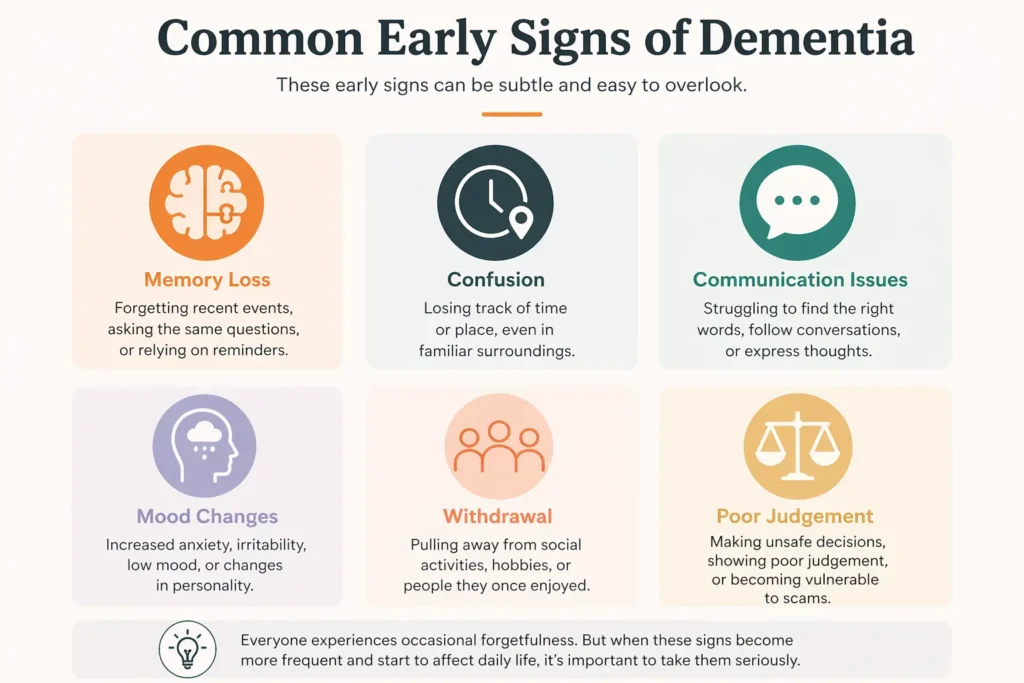
Here are some of the most common early signs of dementia to look out for:
- Memory loss that disrupts daily life
- Confusion about time or place
- Difficulty completing familiar tasks
- Problems with language or communication
- Changes in mood or personality
- Withdrawal from social activities
- Poor judgement or decision-making
On their own, these signs might not seem significant. But if you’re noticing a pattern — or a gradual increase in these changes — it’s important to take them seriously and consider seeking advice.
10 Early Signs of Dementia You Might Overlook
1. Memory Loss That Disrupts Daily Life (A Common Early Sign of Dementia)
Forgetting things occasionally is part of normal ageing. But with early stage dementia, memory loss becomes more frequent and begins to affect everyday life.
You might notice your loved one:
- Asking the same question several times in a short period
- Forgetting important dates or events
- Relying heavily on notes or others for reminders
This happens because dementia often affects the part of the brain responsible for forming and storing new memories. As a result, recent information is not properly retained, even if long-term memories remain relatively intact.
You may find yourself wondering if you’re overreacting. But when memory problems start to interfere with daily routines or independence, it can be an early sign that something more than typical ageing is happening.
2. Repeating Questions or Conversations
This often appears early and can be one of the first noticeable dementia symptoms in an elderly parent.
For example, your parent might ask what time you’re visiting — and then ask again ten minutes later, without realising they’ve already asked.
This isn’t forgetfulness in the usual sense. It reflects changes in short-term memory, where the brain struggles to store and recall new information. Because the memory isn’t retained, the question feels new to them each time. This can feel confusing or frustrating at first. But frequent repetition like this is often a key early sign of dementia, particularly when it happens consistently within short periods.
3. Confusion About Time or Place
Someone with early signs of dementia may begin to lose their sense of time and surroundings.
You might notice they:
- Lose track of dates, seasons, or the passage of time
- Become confused about where they are, even in familiar places
- Struggle to follow routines they’ve known for years
They might go to the shops and forget how to get home. Or wake up unsure whether it’s morning or evening.
This happens because dementia can affect the brain’s ability to process and interpret information about the environment. Familiar places can start to feel unfamiliar, and time can become difficult to understand or track.
This can be one of the more worrying early stage dementia symptoms, especially if it begins to impact safety or independence.
4. Difficulty Completing Familiar Tasks
Tasks that were once second nature can become increasingly difficult with early stage dementia.
This might include:
- Following a recipe they’ve used for years
- Managing bills or finances
- Using household appliances
It’s not just forgetfulness; it’s actually a change in the brain’s ability to plan, sequence, and carry out steps.
Even simple tasks rely on multiple parts of the brain working together. When these processes are affected, your loved one may know what they want to do, but struggle to complete each step in the right order.
This can lead to frustration, withdrawal, or avoidance of tasks they once managed with ease, and is often an early sign of dementia that loved ones notice over time.
5. Struggling to Find the Right Words
You may notice more pauses in conversation, or moments where your loved one seems to lose their train of thought.
Your loved one might:
- Stop mid-sentence and not know how to continue
- Use incorrect or unusual words
- Struggle to name familiar objects
- Repeat themselves without realising
This happens because dementia can affect the areas of the brain responsible for language and communication. Finding the right word, following a conversation, or expressing thoughts clearly can become more difficult over time.
For the person experiencing this, it can feel frustrating or even embarrassing. It can be upsetting for those close to them to witness — especially when conversations that once felt easy start to become strained. When this begins to happen regularly, it may be an early sign of dementia rather than typical ageing.
If this is something you're experiencing, the video below might help:
6. Changes in Mood or Personality (Early Dementia Behaviour Changes)
One of the most noticeable and distressing early signs of dementia for those around them is a change in mood or personality.
You might notice:
- Increased anxiety or agitation
- Irritability or frustration
- Low mood or loss of motivation
- Loss of confidence
- Withdrawal from others
These changes are not simply emotional reactions - they are often linked to physical changes in the brain. As dementia affects areas responsible for emotion, reasoning, and self-awareness, your loved one may feel confused, overwhelmed, or unable to make sense of what’s happening around them.
In some cases, personality traits can become more pronounced. Someone who was always cautious may become more anxious, while someone who was independent may become withdrawn. These changes can feel particularly difficult for loved ones, as it may seem like the person you know is changing. But these behaviours are a symptom of the condition, not a choice, and recognising them early can help you respond with understanding and support.
If your loved one is showing more signs of agitation, you might find this video useful:
7. Unusual or Inappropriate Behaviour
Some people begin to lose their social filter in the early stages of dementia.
This might look like:
- Saying things that feel out of character
- Acting impulsively or without thinking things through
- Showing less awareness of social boundaries
This happens because dementia can affect the parts of the brain responsible for judgement, self-control, and understanding social norms. As these areas change, a person may say or do things they never would have before.
This can feel particularly upsetting or even shocking, especially when it feels so unlike the person you know. But it’s important to understand this behaviour is a symptom of the condition — not a reflection of their character or intentions. When these changes begin to appear consistently, they can be an early sign of dementia that shouldn’t be overlooked.
8. Poor Judgement or Decision-Making
You might begin to notice changes in how your loved one makes everyday decisions.
For example:
- Giving away large amounts of money or falling for scams
- Ignoring personal hygiene or self-care
- Making unsafe choices at home, such as leaving appliances on
These changes are often linked to how dementia affects the brain’s ability to assess risk, solve problems, and make informed decisions. At first, these behaviours can seem small or out of character. But over time, they can have a significant impact on safety, finances, and overall wellbeing. Recognising these patterns early can help prevent more serious issues and ensure the right support is put in place at the right time.
9. Withdrawal from Social Activities
Someone experiencing early stage dementia symptoms may begin to step back from things they once enjoyed.
They might:
- Avoid social events
- Stop hobbies or routines
- Seem quieter or less engaged
This often happens because dementia can affect confidence, communication, and the ability to follow conversations or activities. Situations that once felt easy may start to feel overwhelming or confusing.
Your loved one may worry about saying the wrong thing, forgetting details, or not being able to keep up — so they begin to withdraw instead. This can feel like a gradual loss of connection for those closest to them, but it’s often an early sign of dementia, rather than a conscious choice. Recognising it can help you offer the right support and reassurance.
If you find your loved one is starting to withdraw, take a look at the tips in the video below:
10. Misplacing Things and Accusing Others
Losing items occasionally is a normal part of ageing. But dementia-related memory changes often look different.
You might notice:
- Items being placed in unusual or illogical locations
- An inability to retrace steps to find them
- Accusations that others have taken or moved things
This happens because dementia can affect both memory and reasoning. When someone cannot remember where they placed an item, they may try to make sense of the situation in other ways — sometimes leading to suspicion or blame.
This symptom can be particularly difficult and emotionally upsetting. It may lead to tension or misunderstandings. But these reactions are not intentional — they are a result of how the brain is processing information.When this pattern becomes frequent, it can be an early sign of dementia that may need further support.
Could Memory Changes Be Caused by Something Else?
It’s important to know that not all memory problems are caused by dementia. In fact, several common and treatable conditions can lead to changes in memory, thinking, or behaviour — especially in older adults. Before assuming the worst, it’s worth considering other possible causes.
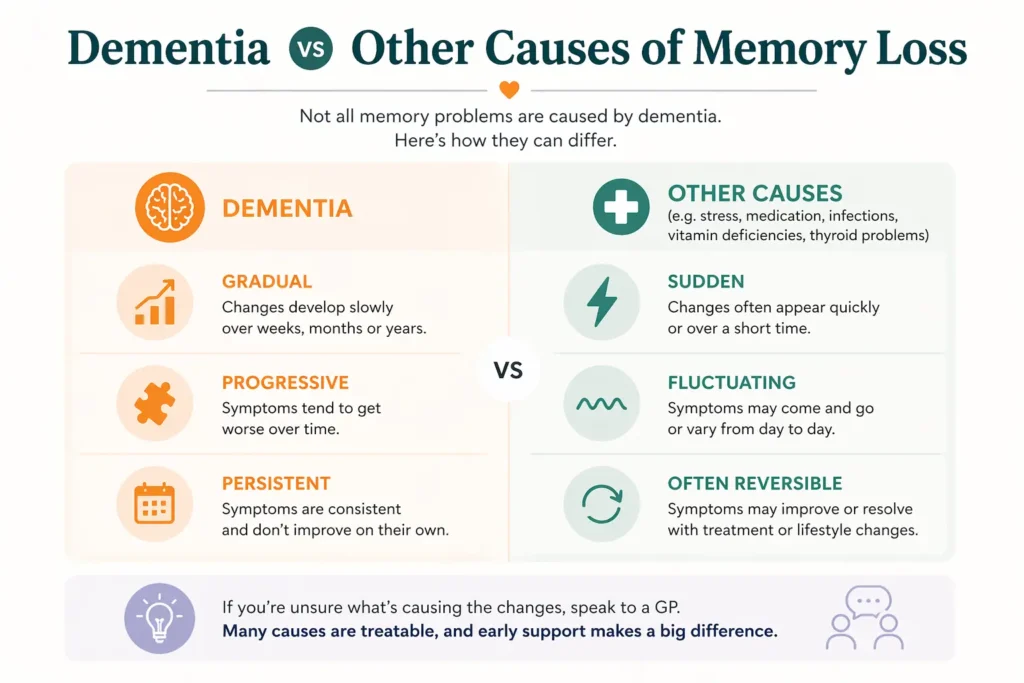
Common non-dementia causes of memory changes include:
- Stress, anxiety, or depression
Low mood and anxiety can affect concentration and memory. People may seem forgetful, withdrawn, or less engaged — sometimes called “pseudodementia” in clinical settings. - Medication side effects
Certain medications — or combinations of them — can impact memory, alertness, or confusion levels. This is particularly common when multiple prescriptions are involved. - Vitamin deficiencies
Low levels of vitamins such as B12 can affect brain function and lead to memory problems or confusion. - Thyroid problems
An underactive thyroid (hypothyroidism) can cause symptoms that mimic dementia, including forgetfulness and slowed thinking. - Infections
Infections — especially urinary tract infections (UTIs) — can cause sudden confusion or disorientation in older adults. - Sleep problems
Poor sleep or conditions like sleep apnoea can affect memory, focus, and mood. - Alcohol use
Excessive alcohol consumption over time can impact memory and cognitive function.
Many of these causes are reversible with the right support or treatment.
So how can you tell the difference between dementia and other conditions?
Dementia symptoms tend to be gradual, progressive, and persistent, while other causes may:
- Appear more suddenly
- Fluctuate day to day
- Improve with treatment or changes in routine
If you’re unsure, the most important step is to speak to a GP. They can rule out other conditions, review medications, and arrange further assessment if needed.
Getting the right diagnosis early ensures your loved one receives the right support — whether that’s treatment for an underlying condition or specialist dementia care.
Why Early Signs of Dementia Are Often Missed in the Early Stage
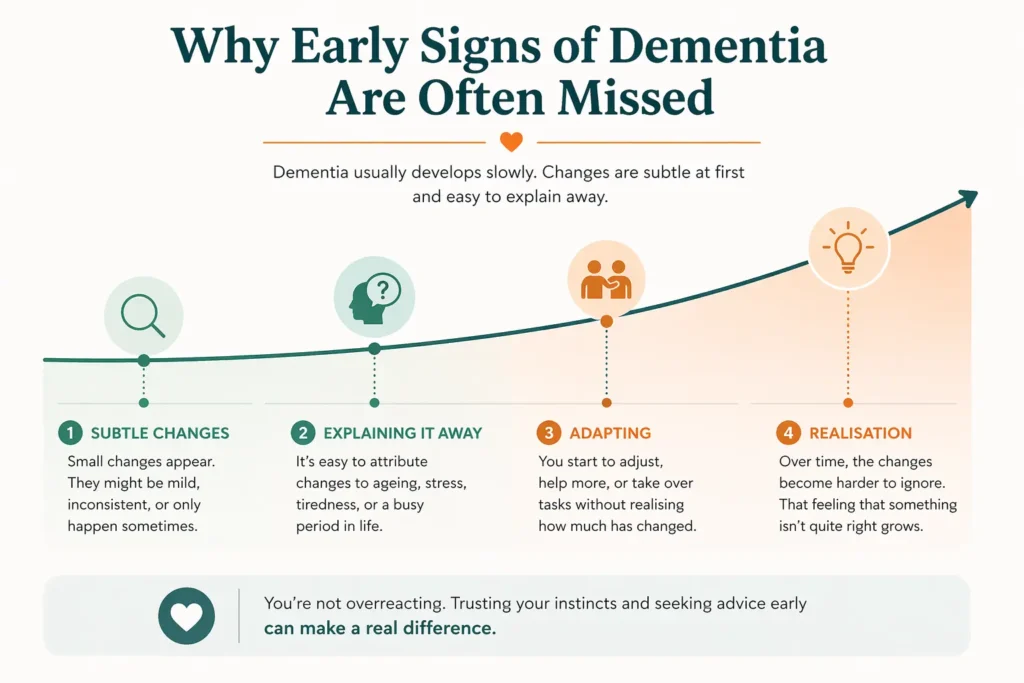
Even after understanding the signs — and knowing that other conditions can cause similar symptoms — many people still miss the early stages of dementia.
This isn’t due to a lack of care or attention. In most cases, it’s because the changes are subtle, gradual, and easy to explain away.
Dementia typically develops slowly, often over months or years. Early symptoms can come and go, or appear mild enough that they don’t immediately raise concern.
Loved ones often:
- Attribute changes to normal ageing or stress
Occasional forgetfulness or mood changes can feel expected, especially during difficult periods or life transitions. - Adapt without realising it
You might start reminding your loved one more often, helping with small tasks, or adjusting routines — without noticing how much support has increased. - See the person at their best
Many people with early dementia can mask symptoms, especially in short conversations or familiar settings. This can make concerns feel inconsistent or easy to dismiss. - Avoid raising concerns
It can feel uncomfortable to question a parent’s memory or behaviour. Many people worry about causing distress, overstepping, or being wrong. - Second-guess their instincts
When symptoms are subtle, it’s common to go back and forth — noticing something one day, then doubting it the next.
You might recognise this pattern in your own experience. That feeling that something isn’t quite right — but not being able to clearly explain why.
This is often how dementia begins.
Recognising these patterns early doesn’t mean jumping to conclusions. It simply means giving yourself permission to pay attention, ask questions, and seek advice if needed.
How Recognising the Early Signs of Dementia Can Help
Noticing the early signs of dementia doesn’t just lead to a diagnosis — it can make a meaningful difference to your loved one’s quality of life and your ability to support them well.
Research from organisations such as the NHS and Alzheimer’s Society shows that early recognition allows people to access the right support sooner, which can help maintain independence and reduce distress.
Here’s how recognising the signs early can help:
- Access to the right support and treatment
Some symptoms can be managed more effectively when identified early. This may include medication, lifestyle adjustments, or support for related conditions like anxiety or sleep problems. - More time to plan and make decisions together
Early awareness gives your loved one a chance to be involved in important decisions about their care, finances, and future — while they are still able to express their preferences clearly. - Maintaining independence for longer
With the right routines, environment, and support in place, many people can continue living safely and comfortably at home for longer. - Reducing stress, confusion, and crisis situations
When changes are understood, they’re easier to manage. This can prevent situations where symptoms suddenly escalate without support in place. - Helping eople respond with understanding
Recognising that changes are linked to dementia — rather than personality or choice — can shift how you respond, making it easier to stay calm, patient, and supportive. - Connecting with specialist dementia care earlier
Early support from trained Caregivers or Dementia Specialists can provide structure, reassurance, and practical strategies tailored to your loved one’s needs.
Taking action early isn’t about labelling someone or rushing to conclusions. It’s about giving your loved one the best possible support, at the right time, in a way that protects their dignity and wellbeing.
What to Do If You Notice Early Signs of Dementia in a Loved One
If something doesn’t feel right, it’s important not to ignore it but it’s just as important not to panic. Many of the early signs of dementia can feel uncertain at first. Taking practical steps can help you understand what’s happening and make sure your loved one gets the right support.
Here’s what you can do:
1. Keep a Clear Record of Changes
Start by noting the changes you’ve observed. This can make a real difference when speaking to a GP or specialist.
Try to record:
- What happened (for example, repeating questions or getting confused)
- When it happened and how often
- Whether anything seemed to trigger it (such as tiredness or unfamiliar environments)
Having specific examples helps professionals understand whether this could be early stage dementia symptoms or something else.
2. Arrange a GP Appointment
A GP should always be the first step if you’re concerned.
They can:
- Rule out other causes of memory problems (such as infections, vitamin deficiencies, or medication side effects)
- Carry out initial memory and cognitive assessments
- Refer your loved one to a specialist memory clinic if needed
Encouraging your loved one to attend can feel difficult, but framing it as a general health check can make the conversation easier.
3. Approach Conversations with Care and Reassurance
It’s natural to want answers, but pushing too hard can lead to resistance or distress.
Instead:
- Choose a calm, familiar moment
- Focus on their wellbeing rather than the problem
- Use supportive language, not labels or assumptions
For example, you might say:
“I’ve noticed you’ve seemed a bit more forgetful lately — would you be open to getting it checked, just to be safe?”
The goal is to open the door to support, not force agreement.
4. Involve Family and Share Responsibility
You don’t have to manage this alone.
Talking to other family members can:
- Help confirm whether others have noticed similar changes
- Reduce the pressure on you
- Ensure a more consistent, supportive approach
It can also make conversations with your loved one feel less isolating and more supportive.
5. Look at Practical Support Early
Even in the early stages, small adjustments can make a big difference.
This might include:
- Establishing simple, consistent routines
- Using reminders or visual prompts
- Reducing stress and overstimulation at home
Early support can help your loved one feel more confident and maintain independence for longer.
6. Seek Specialist Dementia Support When Needed
If symptoms are becoming more frequent or starting to affect daily life, professional support can help.
Specialist dementia care — whether through visiting Caregivers or live-in support — can:
- Provide structure and reassurance
- Support daily routines and personal care
- Help manage changes in behaviour or mood
Getting support early isn’t about taking over. It’s about putting the right help in place before things become overwhelming.
Taking these steps doesn’t mean you’re confirming a diagnosis. It means you’re making sure your loved one is safe, supported, and understood — whatever the cause may be.
We were joined by Sarah Cooper, an Admiral Nurse, on The Care Podcast not too long ago, who spoke all about accessing the right support after a diagnosis and how it can help:
When to Seek Dementia Care Support
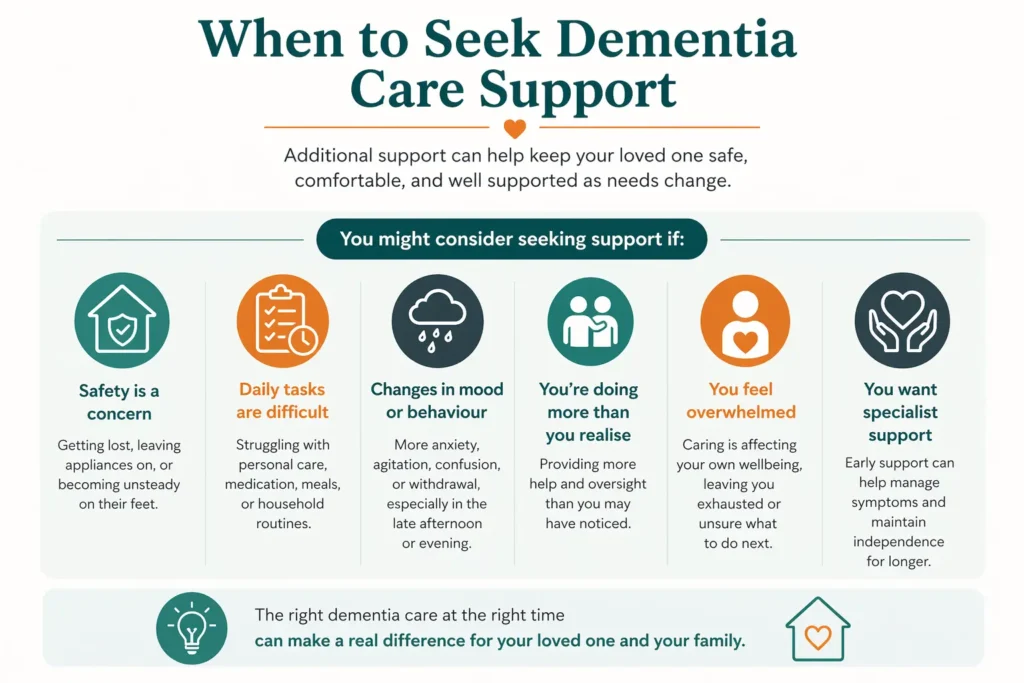
There may come a point where additional support is not just helpful — but necessary to keep your loved one safe, comfortable, and well supported. Dementia is progressive, which means needs often increase over time. Recognising when to introduce support can prevent unnecessary stress and help avoid crisis situations.
You might consider seeking dementia care support if:
- Safety is becoming a concern
For example, your loved one is getting lost, leaving appliances on, or becoming unsteady on their feet. - Daily tasks are being missed or becoming difficult
This might include eating regularly, managing medication, maintaining personal hygiene, or keeping up with household routines. - Behaviour or mood changes are increasing
You may notice more anxiety, agitation, withdrawal, or confusion — particularly later in the day. - You’re providing more support than you realise
Many loved ones gradually take on more responsibility without noticing how much things have changed. - You feel overwhelmed, exhausted, or unsure what to do next
This is one of the most important signs. If caring is starting to impact your own wellbeing, it’s time to seek support.
Introducing care early doesn’t mean losing independence. In many cases, the right support can help your loved one stay in familiar surroundings for longer, with more confidence and stability.
Options such as visiting Caregivers or live-in dementia care can provide:
- Consistent routines and reassurance
- Support with daily tasks and personal care
- Help managing behaviour changes
- Peace of mind for the whole family
What to Do Next If You’ve Noticed These Early Signs
If you’ve recognised some of these early signs of dementia, it’s important to trust that instinct. Many people are unsure what to do at this stage, but understanding the steps towards a dementia diagnosis and support can help you feel more prepared and confident.
Taking action early can help your loved one feel safer, more comfortable, and better supported — while also giving you clarity and peace of mind. You don’t have to figure this out alone.
If you’d like to chat things through, speaking to a member of our friendly, experienced team can help you understand your options and take the next step with confidence. Whether you need advice, reassurance, or practical support, we’re here to help you and your family every step of the way.
External references

Chloe joined us in early 2024 as our content manager. Having earned a first-class degree in digital marketing and spending more than six years in public relations, she’s well-placed to shape informative content, editorial policy and heartfelt stories that help inform our clients and connect them with the care they need.
Having worked across a multitude of different industries before care, Chloe’s passion lies in the meaningfulness of her work – from creating content that guides clients through their care journey to helping Caregivers find a rewarding new role.
At Unique, Chloe finds fulfilment in our supportive culture and the heart-warming stories from both clients and carers that highlight the impact of our services.
Chloe holds a first-class Bachelor’s degree in Digital Marketing from University College Birmingham. Before joining Unique Senior Care, she spent over six years working in public relations, including roles at WPR Agency and her own PR consultancy, building experience across content strategy, brand storytelling and media relations. She brings this background to shaping the editorial voice and content strategy behind Unique Senior Care’s care advice, client stories and news.


