

Summary: If you're searching for overnight care, you're probably dealing with a very specific worry: what happens at night? Whether it's for a parent, a partner, or for yourself, this guide explains the different types of overnight care available, what each one actually includes, what they cost, and how to know which option is the right fit.
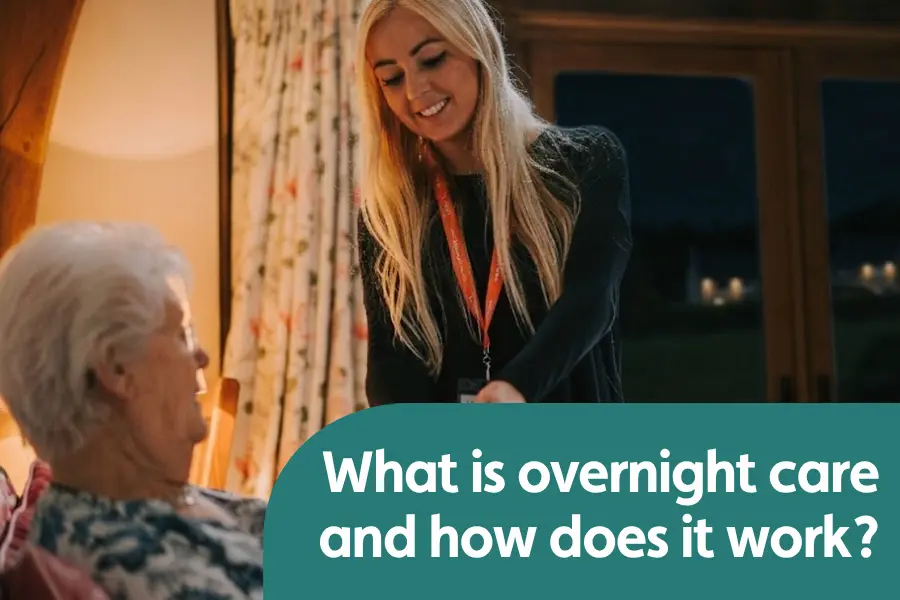
Night-time is often the point at which families start to feel the gap between what someone needs and what they can safely manage alone. Days might be going relatively well, but once the lights go off, things feel different. Someone might be getting up frequently, feeling unsafe, or simply struggling with the anxiety of being alone through the night. Overnight care exists precisely to fill that gap, but it isn't one single service, and understanding the difference between the options available is important before making any decisions.
What Is Overnight Care at Home?
Overnight care at home means a professional carer comes to - or stays at - the person's own home to provide support through the night. Home care can be needed at night as well as during the day, and the right type of support depends on the frequency and nature of the need.
For most families, overnight care becomes a serious consideration when one or more of the following starts happening regularly: getting up in the night and being at risk of a fall, needing help to use the toilet, experiencing confusion or anxiety in the dark hours, or simply not being able to sleep safely without someone nearby. It can also be a short-term arrangement to cover a period of recovery, give a family carer a proper break, or bridge a gap while a longer-term care plan is put in place.
The key thing to understand from the outset is that there are two quite different types of overnight care: sleeping night (sleepover) care and waking night care. They are not interchangeable, and confusing them is one of the most common reasons families end up with a package that doesn't quite fit.
Sleeping Night Care vs Waking Night Care: What's the Difference?
Sleeping Night Care (Sleep-In)
A sleeping night, sometimes called a sleepover, means a carer comes to stay in the home overnight. They are present, they are contactable, and they can help if needed. But the expectation is that they sleep. This type of overnight care is built around reassurance and occasional assistance, not active support throughout the night.
It's appropriate when someone might need help once or twice, for maybe a trip to the bathroom, a drink of water, or a moment of reassurance, but is otherwise settled through the night. Any overnight care arrangement should be built around a personalised care plan that's clear about what's included and what falls outside it, so there are no surprises on either side.
Most providers describe a sleeping night as suitable for up to two or three disturbances of short duration. If nights are becoming more unsettled than that, with longer, more frequent, or more physical interventions, the sleeping night model starts to break down. At that point, a different arrangement is needed.
Waking Night Care
A waking night is a different service entirely. The carer is awake and on duty throughout the night. This means they're not sleeping in a spare room, but actively present and available to respond at any point. This is the most appropriate option when support needs are frequent, unpredictable, or require immediate response.
Waking night care is often the right choice when someone wakes multiple times, needs physical help each time (repositioning, transferring, personal care), experiences night-time confusion or distress, or has a condition that means their needs can change quickly. For genuinely unsettled nights, it's worth taking time to understand the level of need before settling on a service type, as a waking arrangement provides a level of responsiveness that a sleep-in simply cannot match.
Does the Carer Have to Stay Awake All Night?
This is one of the most common questions families ask, and the honest answer is: it depends on which type of overnight care you arrange. With a sleeping night, no, the carer is not expected to remain awake, and in fact the whole pricing and structure of that service is built on the assumption that they will sleep. With a waking night, yes, they are awake throughout, which is why waking nights cost more.
A good question to ask yourself is: what does a typical night actually look like? If the answer is "usually fine, occasionally unsettled," a sleeping night is probably appropriate. If the answer is "frequently interrupted, with real care needed each time," a waking night is the safer and more practical fit. It's also worth asking what happens if needs change, as a good provider will help you review and adapt the care package over time rather than leaving you on an arrangement that's no longer suitable.
How Many Times Can a Sleep-In Carer Be Called Upon in the Night?
There isn't a single universal rule, but public guidance from providers clusters fairly consistently around up to two or three disturbances per night, each of short duration. Beyond that, the expectation of a sleeping night arrangement has usually been exceeded, and it may become unfair on the Caregiver and potentially unsafe for the person receiving care.
Of course, care isn't always predictable. An occasional unsettled night doesn't necessarily mean the arrangement needs to change. Providers will usually look at the overall pattern over time. If regular interruptions become the norm, it's a sign that a waking night or a different care package may be more appropriate.
This is something worth discussing explicitly before any care arrangement is confirmed. Useful questions to ask include: how many wake-ups are covered under a sleeping night? How long can each one reasonably last? What's the process for reviewing the arrangement if nights become more demanding? What would trigger a move to a waking night or a broader package?
At Unique Senior Care, we're always straightforward about this. Our sleeping night rate applies when a Caregiver can reasonably expect at least four hours of continuous sleep during the night. If someone's needs change and regular overnight support means this is no longer possible, the shift moves to our standard hourly overnight rate instead. At that point, the role has effectively become a waking night, with a very different level of responsibility for the Caregiver.
How Much Does Overnight Care Cost?
Overnight care costs vary depending on which type of support is needed, when it falls, and whether bank holidays are involved. Our pricing reflects the real cost of providing a regulated, staffed service and overnight care, particularly waking nights, reflects the full cost of having a professional awake and responsible throughout the night.
At Unique Senior Care, our overnight pricing works as follows:
| Service | When it applies | Price |
|---|---|---|
| Sleeping night care | 10pm to 7am, carer sleeps | £275 per night |
| Waking night care (weekday) | 8pm–8am, Mon–Fri | £44 per hour |
| Waking night care (weekend) | 8pm–8am, Sat–Sun | £47 per hour |
| Bank holiday (any overnight) | Applicable bank holidays | Double standard rate |
A full waking night of, say, ten hours on a weekday would come to £440. Seven sleeping nights would be £1,925 per week. These figures are useful to have in mind when comparing overnight care with other options — particularly live-in care, where the weekly cost can start to look quite similar once nights are needed regularly.
When Does Live-In Care Become Better Value Than Overnight Care?
This is the comparison question that families often reach last, when they should probably be asking it earlier. If someone mainly needs support during the day, with occasional help overnight, the cost gap between regular sleeping nights and live-in care can narrow much faster than most people expect.
Our live-in care for an individual starts at £1,855 per week. That's a Caregiver living in the home, providing support throughout the day and available for the occasional bit of reassurance or help to the toilet overnight, all for a single weekly rate. However, it's important to note, just like a sleeping night, this assumes the Caregiver can still get adequate rest overnight so they can provide the best care. Consider that against the following:
- →Seven sleeping nights per week: £1,925 - already above live-in care, before any daytime visits are counted.
- →Adding regular daytime visits for personal care, medication and meals alongside sleeping care can make live-in care an even better-value option.
- →If someone regularly needs active support throughout the night, standard live-in care isn't designed to replace a waking night. In these situations, either a waking night alongside live-in care, two Caregivers working over a 24-hour period, or another tailored arrangement may be more appropriate.
£1,925 / wk
£1,855 / wk
That said, overnight care, and particularly sleeping nights, can absolutely be the right answer. If someone is independent and safe during the day and only needs overnight reassurance a few nights a week, there's no reason to move to a live-in arrangement. There's no need to rush into more care than is necessary; it should reflect what they actually want and need, at a cost structure that makes sense for their situation.
Where live-in care tends to become a better choice is when someone needs support throughout the day, as well as the reassurance of having someone there overnight. Rather than arranging multiple daily visits alongside sleeping night care, a live-in Caregiver can provide greater continuity, build a close understanding of someone's routines and preferences, and often represent better value overall.
Is Overnight Care Right for You? Questions Worth Asking Before You Decide
Before speaking to any provider, it helps to have a clear picture of the current situation and what you're actually trying to solve. These are the questions we'd encourage anyone to think through:
- →How many nights per week is overnight support needed?
- →Is the need occasional help (sleeping night) or regular, active support (waking night)?
- →What does a typical night currently look like — and is it getting more or less settled?
- →Is there also a need for daytime support, and if so, how much?
- →Is overnight care intended to be a long-term arrangement or a short-term solution?
- →Has a care needs assessment been completed — and if not, would that help clarify the right level of support?
It's also worth knowing that a formal care needs assessment through your local council can help establish what level of support is needed and whether any funding is available. Even if you intend to arrange private care, it's worth understanding what an assessment recommends before committing to a particular service type.
Overnight Care at Home: The Key Points to Take Away
Overnight care isn't one single service. A sleeping night means a Caregiver is present and available to help occasionally but is expected to sleep. A waking night means they're awake and on duty throughout the night. The right option depends on how much support is actually needed once the day comes to an end.
Sleeping nights are usually the lower-cost option, but they can add up surprisingly quickly when needed every night. If someone also needs increasing support during the day, live-in care can become the simpler and better-value option. If someone regularly needs active support throughout the night, however, then a waking night or another more tailored option may be more appropriate.
If you'd like to talk through what overnight care would look like in your situation, or whether live-in care might be a better fit, we're happy to have that conversation at any point, without any pressure to commit. Just get in touch with our friendly team through the contact details on our website.
Unique Senior Care is a regulated provider of live-in and visiting care. We provide Live-in Care across England and visiting care throughout the Midlands. All prices quoted are effective from 1st April 2026 and exclude bank holidays, which are charged at double the standard rate.
External references
- NHS — Home care services: what they are and how to get them
- Care Quality Commission — Guidance for homecare providers
- Age UK — Home care: what it is and how to arrange it
- Homecare Association — Minimum price for homecare 2026/27
- Skills for Care — The state of the adult social care sector and workforce in England
- NHS — Getting a needs assessment from your local council

With over 40 years of experience in the care industry, providing outstanding care has always been Helena’s core mission.
Helena has been a dedicated member of Unique Senior Care for eight years, starting as Care Manager and advancing to Head of Extra Care and now serving as Director of Operations.
She holds a Level 5 Diploma in Leadership for Health and Social Care and Children and Young People’s Services (England), as well as a Diploma in Welfare Services. Helena has completed various leadership and management courses, enhancing her expertise in the care industry.
Helena has authored published articles, including one for Skills for Care on managing change through the COVID pandemic. She has a steadfast commitment to advocating for and supporting those in need, ensuring their voices are heard and their rights upheld.